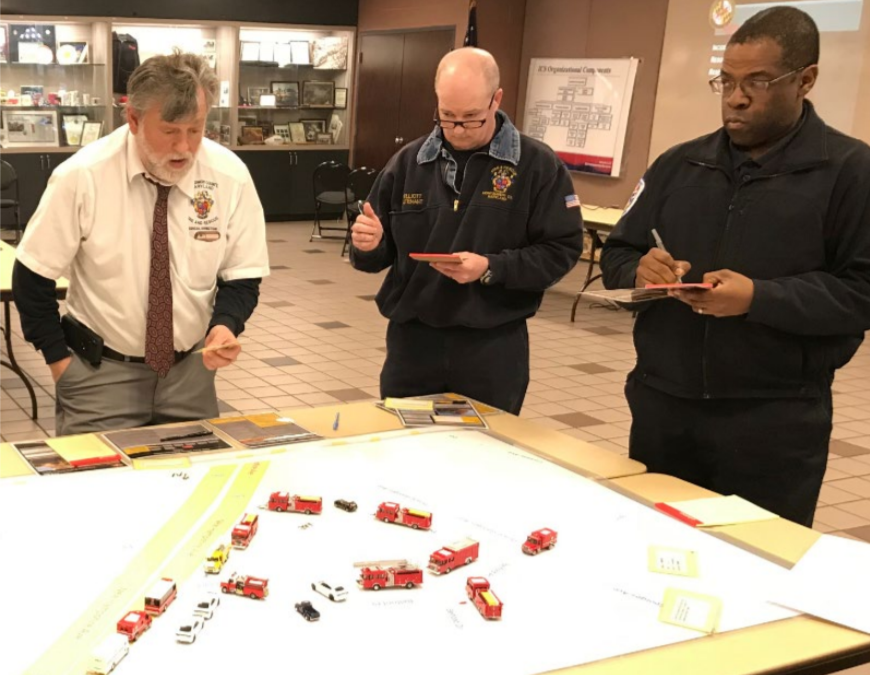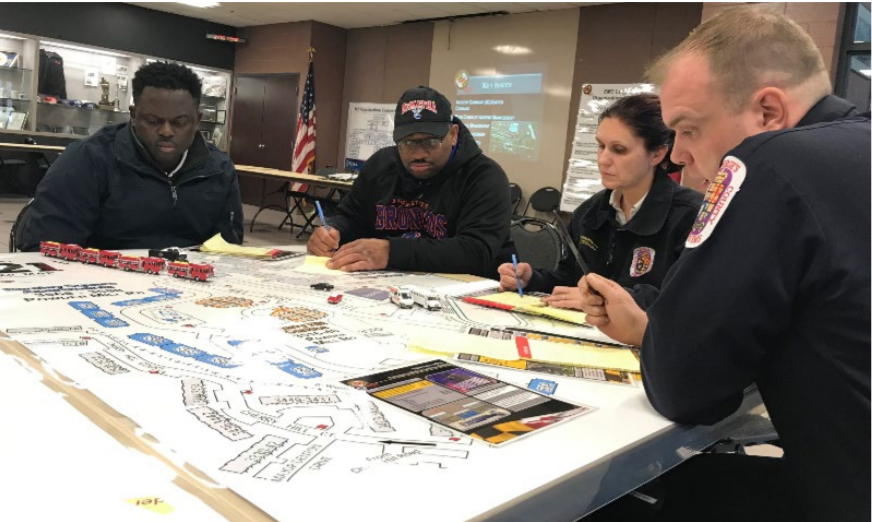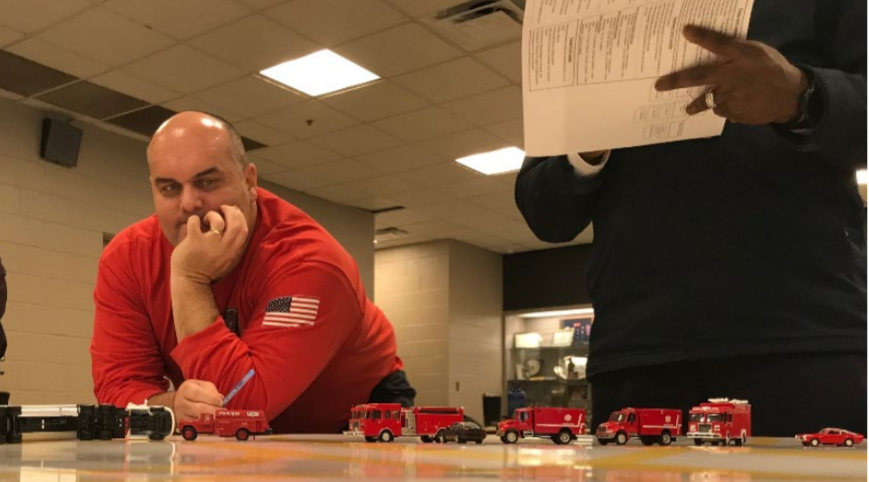
The Maryland-National Capital Emergency Response System hosted the Emergency Response Symposium: Multidisciplinary Response to Emergency Incidents on April 18, 2019. This event, hosted on an annual basis, is intended to bring lessons learned from national and international leaders who have responded to challenging incidents in order to provide lessons learned to the local Maryland emergency response community. The real-world experience, coupled with a different means of strategizing and operating, stimulates thought and paradigm shifts locally to optimize multiagency, multidisciplinary, and multijurisdictional approaches in the National Capital Region and beyond, supporting the mission of the Maryland Emergency Response System.
This year’s event brought leaders from multiple disciplines that responded to the numerous 2017 terrorist attacks in the United Kingdom, each of which led to a mass casualty event. The Ariana Grande concert, London Bridge, and Westminster Bridge attacks were the topics for the year. These attacks introduced vectors rarely seen in the US, such as mass stabbing attacks, improvised explosive devices, and vehicle rammings. In the days preceding the Symposium, the presenters from the UK were introduced to Maryland and the broader National Capital Region. These activities included a trip to the Maryland Institute for Emergency Medical Services Systems (MIEMSS). Personnel from the London Fire Brigade and London Ambulance Service met with Dr. Delbridge and Dr. Chizmar to review the Maryland System approach and discuss medical protocols. Following the MIEMSS briefing, our guests completed a tour of the R. Adams Cowley Baltimore Shock Trauma Center.
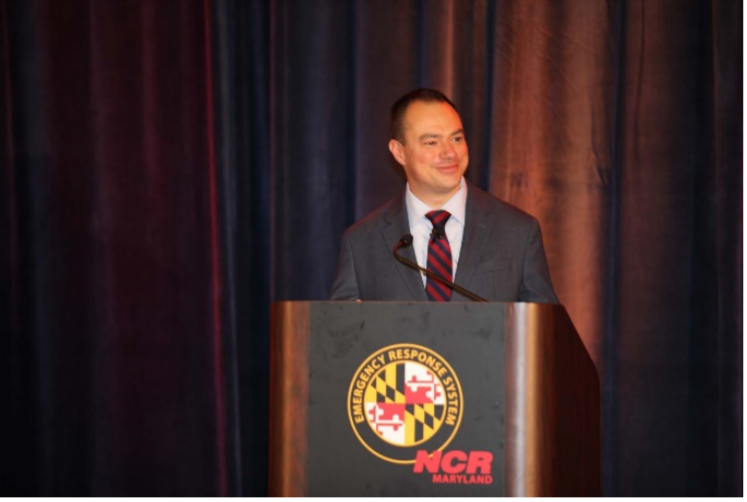
The symposium opening remarks were delivered by Director Luke Hodgson. The Opening Keynote address was presented by Jim Schwartz, Deputy County Administrator and former Fire Chief for Arlington County, Virginia. Jim was the Incident Commander at the Pentagon on 9/11 and has since devoted his passion towards better preparing the NCR through collaboration across disciplines and jurisdictions. His message to the audience was to communicate with government leaders on a regular basis, collaborate with other agencies before the incident, and invest the time and effort to build relationships.
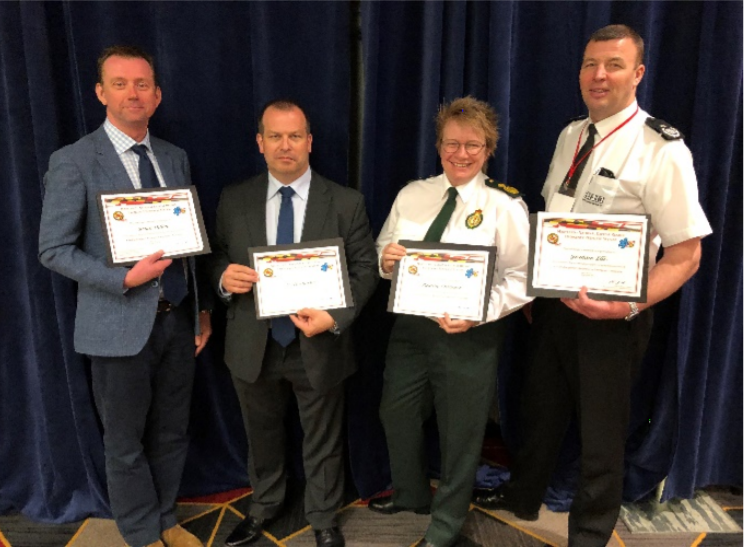
A group of subject matter experts presented from the United Kingdom provided the audience with an explanation of terrorist incidents that have occurred in the last five years. These events are thousands of miles away but the information presented and lessons learned can be applied in your community.
Mr. Brian Dillon provide a guided lecture about security, risk assessment, and critical incident management. Chief Inspector Scott Thorne of the London Metropolitan Police Service delivered information focused at the tactical personnel reviewing a series of high threat incidents and lessons learned in response. His direction was become familiar with all buildings in your area, preplan all buildings and know the ways, systems and obstacles into and out of the buildings, with focus on the basic skills.
Assistant Commissioner Graham Ellis of the London Fire Brigade delivered information from the fire suppression lens. His key points were to communicate with your law enforcement partners to share information about tasks and activities that are critical for the fire service. Second, was to educate key leaders and elected officials about the resources required to maintain constant state of readiness. In closing, he stated the three ways that the fire service could reduce injury with active fire prevention programs, smoke detector installation, and requirement for home fire escape plans.
Ms. Pauline Cranmer is the Head of Emergency Care Services for the London Ambulance Service and offered her unique perspective offered insights that local departments must include in planning. Ms. Cramner described the Westminster terror attack, where a driver drove a car into a crowd killing and injuring people, then exited the vehicle to stab others. Her lessons learned include preparing crews to act swiftly in response to an unplanned event and calculate the resources required to assist local hospitals in response to the wave of injuries that arrive other than by ambulance. In closing, she emphasized the need to communicate the same message from police, fire, EMS, and other allied agencies.
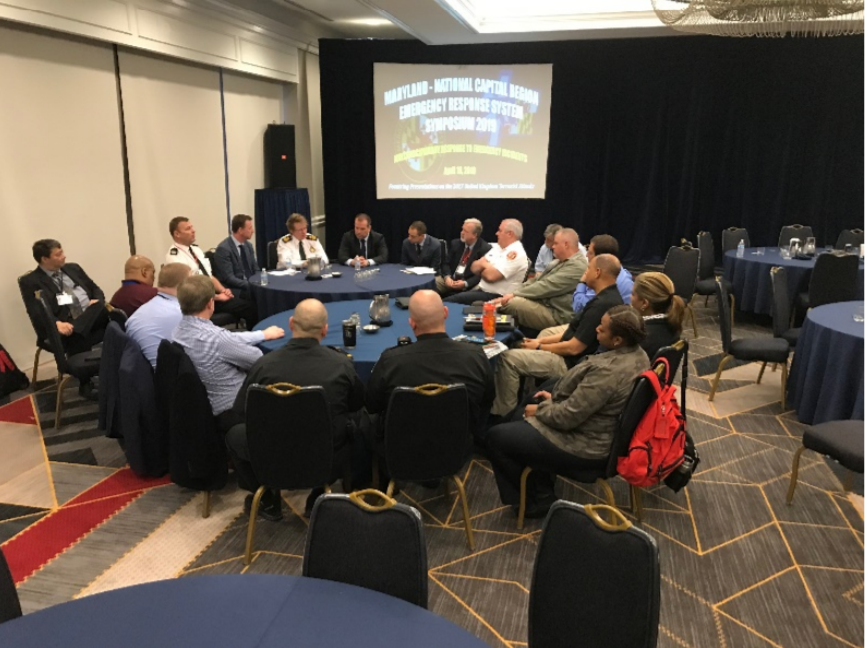
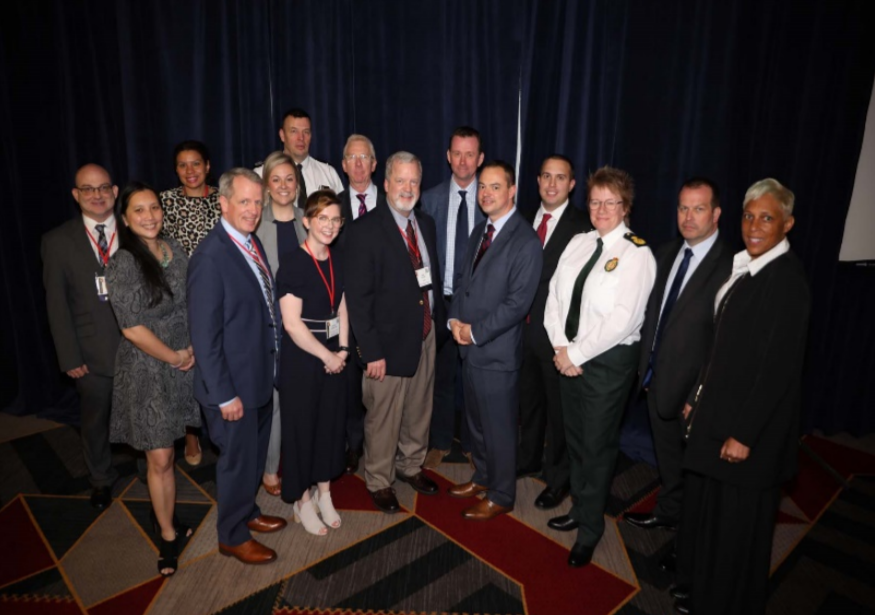
A post-symposium event occurred in which the panel experts answered questions in a smaller group setting. This session had several dozen local leaders from various disciplines in attendance. Each question was met with a comprehensive answer that included perspectives from all disciplines. The session was of great value to those that attended.
These speakers represented a unique set of views from departments that are experienced, trained, and engaged in daily active terrorist threats. The lessons learned and direction from these subject matter experts are recommendations are applicable locally to best protect our communities. Now is our time to take action at the local, county, and regional level. That action must incorporate direction form our elected officials, and key leaders to assess our capabilities, determine gaps, and allocate resources to meet needs.
The Maryland Emergency Response System is available to assist you with emergency response and capability building. Please contact Michael McAdams, Program Manager at Michael.mcadams@maryland.gov for additional information.