In an effort to strengthen coordinated response capabilities during high-risk incidents, the Maryland-National Capital Region Emergency Response System (MDERS), in collaboration with Montgomery County Police Department (MCPD), developed a tabletop exercise (TTX) master scenario events list (MSEL) and Incident Command System (ICS) slick sheet for use in the MCPD executive-level training in-service. This initiative reflects a growing emphasis on preparing executive level personnel to make timely, effective decisions in rapidly evolving active threat situations.
The primary objective of this TTX is to evaluate the ability of executive-level supervisors to establish command and manage a coordinated response during an active threat incident. Participants are expected to effectively request and allocate resources to mitigate the threat while prioritizing the protection of life and property. A key component of the exercise is the application of ICS policies specific to law enforcement, ensuring that command structures are clearly defined and implemented effectively.
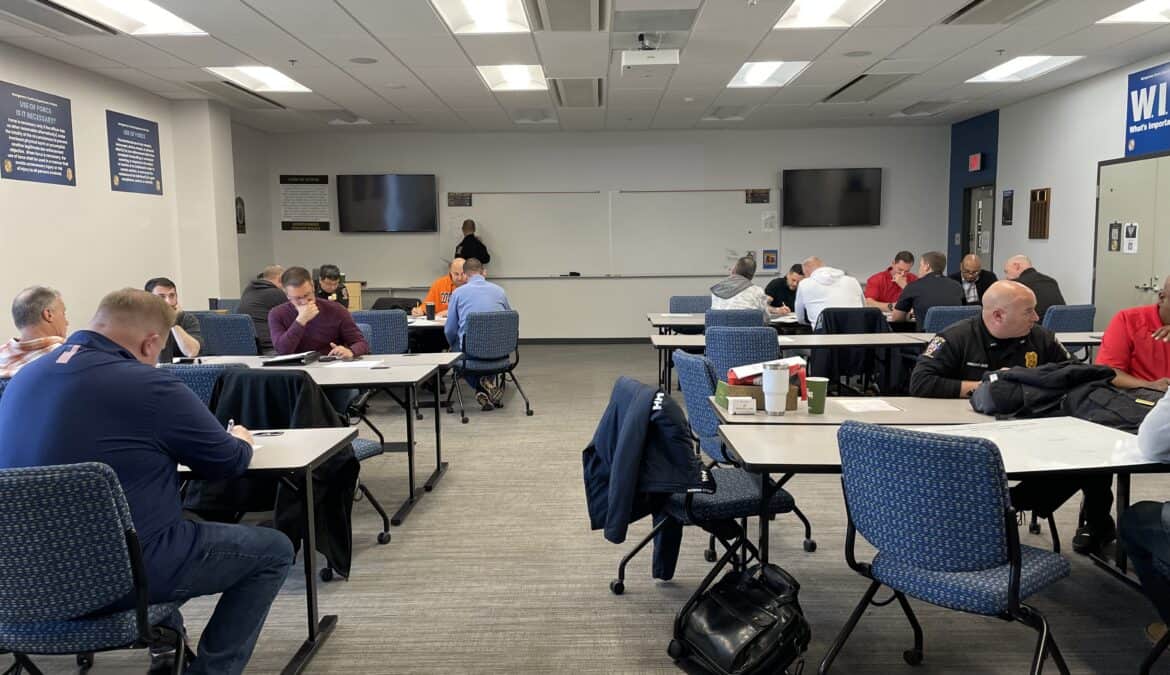
The TTX is structured to be delivered across five separate classes, allowing for broad participation and iterative learning. The first session was conducted on March 18, 2026, and included 30 participants representing a range of supervisory roles. This session introduced a departure from MDERS’ traditional tabletop format; instead of a single large discussion group, participants were divided into four smaller groups of six to eight individuals. This structure encouraged more active engagement and ensured that each participant had the opportunity to contribute to decision-making processes. During the exercise, a controller/facilitator presented scenario injects and guided each group through a structured response discussion. Groups were tasked with assessing the situation, determining priorities, and outlining actionable steps in real time.
In addition to command-level decision-making, the exercise was designed to encourage dialogue around Rescue Task Force (RTF) operations. A rescue task force is a coordinated response model in which fire and emergency medical services (EMS) personnel enter a designated “warm zone”, an area that has been cleared of immediate threats but is not yet fully secure, to provide rapid medical care to victims. By integrating RTF concepts into the scenario, the exercise fosters interagency collaboration and highlights the importance of balancing tactical safety with lifesaving interventions.
To support the exercise, MDERS provided an ICS slick sheet as a quick-reference guide summarizing key ICS principles for law enforcement. This includes a one-page refresher on ICS fundamentals, an active threat Incident Command organizational chart tailored to MCPD personnel, and a QR code linking to the simulated incident location to enhance realism and situational awareness. The exercise scenario focused on an active shooter at a large public venue, requiring participants to address complex challenges such as resource allocation, interagency coordination, and evolving threat conditions while maintaining clear command and prioritizing victim care.
MDERS also leveraged training and exercise grant funds to improve the overall experience, providing professional training portfolios and meals to keep participants organized and engaged throughout the session. This executive-level TTX represents a meaningful advancement in leadership preparedness for active threat incidents, combining realistic scenarios with structured decision-making and practical tools. As additional sessions are conducted, lessons learned will continue to refine the program and strengthen regional readiness for complex emergencies.
Written by Elizabeth Adams