Introduction
The Metropolitan Washington Council of Governments (MWCOG) is a non-profit organization that is designed to facilitate collaboration and coordination across the National Capital Region (NCR) and surrounding areas. The membership includes the governments of 24 cities and counties; the State of Maryland, Commonwealth of Virginia, and District of Columbia; and the federal government.
Given the NCR’s population, threat profile, and complexity, there is a need for regional collaboration for emergency response and public safety. This coordination is supported by MWCOG’s Department of Homeland Security and Public Safety (DHSPS). DHSPS has a full-time staff that supports groups of subject matter experts and public safety leaders from MWCOG member jurisdictions who come together to prepare for routine and large-scale emergencies. These leaders organize through a system of committees and boards.
Regional Emergency Support Function (RESF) Committees
The general approach to coordination across the region is bringing together the leaders of specific disciplines from across the NCR. These groups are organized based on the Federal Emergency Management Agency’s (FEMA) National Response Framework (NRF) and National Incident Management System (NIMS). The Emergency Support Functions (ESF) group together resources and capabilities based on functional areas and disciplines. These ESFs focus on a single discipline but bring together many jurisdictions and organizations responsible for providing that service. In the NCR, the active RESF committees consist of the following:
- RESF-1: Transportation
- RESF-2: Communications, Information Technology
- RESF-4/9/10: Firefighting, Search and Rescue, Hazardous Materials
- RESF-5: Emergency Management
- RESF-6: Mass Care, Emergency Assistance, Human Services
- RESF-8: Public Health and Medical Services
- RESF-13: Law Enforcement, Public Safety and Security
- RESF-15: Public Information, External Affairs
Regional Emergency Support Function (RESF) Subcommittees
Each of the aforementioned RESF Committees is supported by numerous subcommittees. These subcommittees, which are comprised of subject matter experts and leaders within the discipline, focus on a specific topic, task, specialty, or capability within the discipline. As an example, RESF-4/9/10, which is also known as the Fire Chiefs Committee, is supported by subcommittees that include:
- Emergency Medical Services
- Fire Health and Safety
- Hazardous Materials
- Passenger Rail Safety
- Technical Rescue
Regional Programmatic Working Groups
Many of the NCR’s public safety responsibilities transcend any single discipline. For these capabilities, it is necessary to bring together a diverse set of subject matter experts from a number of different fields to address the issue. Regional Programmatic Working Groups (RPWGs) are designed to be cross-disciplinary and cross-jurisdictional. Examples of NCR RPWGs include:
- Health and Medical
- Cyber Security
- Situational Awareness
- Complex Coordinated Attack
Advisory Council
The Advisory Council is a group that is tasked with collecting input across the RESF and RPWG groups, and making recommendations to the Homeland Security Executive Committee (HSEC) on issues of policy and funding. Each RESF has representation on the Advisory Council, which is appointed by membership of the respective RESF. The Advisory Council is charged with carrying out the strategic direction of the HSEC, while maintaining a feedback loop from the entire community of RESF and RPWG committees. The Advisory Council is expected to develop comprehensive solutions that complement the mission space of all disciplines and jurisdictions, while deconflicting the differing priorities across these groups.
Homeland Security Executive Committee
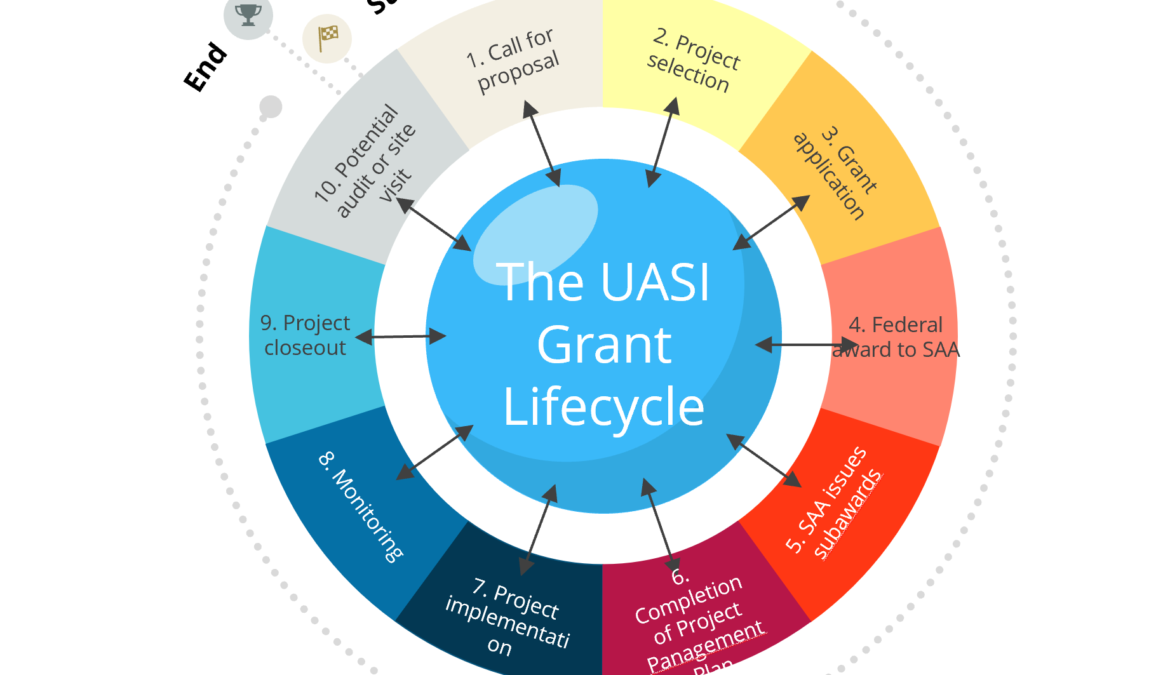
The Homeland Security Executive Committee (HSEC) is the policy making body of the NCR public safety community. The group is comprised of senior leadership from each of the core member jurisdictions. This includes Chief Administrative Officers (CAO) or Deputy Chief Administrative Officers (DCAO) for public safety and homeland security in the counties and cities of the NCR; the District of Columbia, Maryland, and Virginia state directors for emergency management and homeland security; and the Director of the Federal Emergency Management Agency (FEMA) Office of National Capital Region Coordination (ONCRC). The group’s mission is to help NCR jurisdictions prevent, protect against, and respond to all-hazards, public safety, and homeland security events that require regional coordination. The group establishes a shared regional vision and strategic direction based on unmet needs found in capability and risk assessments. It allocates personnel to serve on the RESFs and RPWGs to carry out the direction of the group. Through the Advisory Council, the body receives recommendations for public safety enhancements, which can lead to policy changes and funding investment. The group is the designated Urban Area Working Group (UAWG), which is ultimately responsible for the distribution of the Urban Area Security Initiative grant (UASI) for the NCR. This multi-million-dollar grant is used to support capability development and expansion throughout the NCR in accordance with the strategic vision of the HSEC.



 The Maryland-National Capital Region Emergency Response System is excited to announce that Peter McCullough, JD, has joined the team in a contractor role to assist with numerous evolving projects. Peter joins us from the Center for Health and Homeland Security (CHHS), where he is a Law & Policy Analyst. He is a graduate of the University of Maryland, Francis King Carey School of Law, with a concentration in Cybersecurity and Crisis Management. Most recently, he worked directly with the District of Columbia Homeland Security and Emergency Management Agency (DCHSEMA) as an integral part of the 2021 Presidential Inauguration. He brings both professionalism and a fresh perspective to the field of response. Peter is eager to work with the entire MDERS stakeholder community, sharing his expertise to help enhance many of the current projects.

 A fully stocked EMS in a Box Storage cabinet.


 Firefighter decontamination supplies are stored in a five-gallon bucket. Each bucket contains (1) pump panel hose adapter, (1) 25’ section of hose, (1) nozzle, (1) scrub brush, and (1) container of Dawn dish soap. All engine companies within the Montgomery County Fire and Rescue Service and Prince George’s County Fire/EMS Department carry these supplies, in addition to 1000 gallons of water. Firefighters from the engine company assemble and connect the equipment. The engine officer coordinates the assembly of personnel, sequence of flow, and completion of the action. This firefighter decontamination project provides safe, efficient, and effective decontamination services at the scene.
 The decontamination process is initiated by the incident commander. A “Decontamination Team” is then assigned, and personnel are expected to follow the department policy and procedures of gathering equipment, deploying the hose, and connecting the nozzle. After the Decontamination Leader tells command the site location, personnel (in their firefighter gear) walk the decontamination line. Teams apply a soapy mixture with a brush and scrub exposed personnel head to toe. Each member exits the line after a complete water rinse down. Once complete, the crews reassemble to return to their fire station for additional clean-up activities. The unit and incident commander document the activities in the fire record management system.
 In spring 2021, police officers in the Special Operations Division of MCPD and PGPD received a set of individual decontamination wipes. These products provide point of exposure tools to clear off any substances as early as possible. Combined with the brush-off supplies, these items start the decontamination process. The police officers training plan includes the use of these products in combination with the fire/EMS supplies. Once exposed, the officer uses the wipes and quickly moves to fire/EMS resources for a head-to-toe soap and water scrub down. Additional decontamination measures are completed with medical assessment and treatment.


 Due to their important responsibilities, all security officers were outfitted with a tourniquet and holster, and emergency trauma dressing to always carry on them. They were also provided with the same training as the school nurses and health technicians. MCPS plans to provide this training to teachers and staff, and has included these skills in their curriculum for high school students in the coming years, building a large cadre of trained responders.
 From there, MCPS Systemwide Safety and Emergency Management helped MDERS manage the installation of the remaining bleeding control kits with support from the MCPS Division of Maintenance and Operations. MDERS worked with the Division of Safety and Emergency Management and the Division of Maintenance and Operations to assist with providing the approved FEMA locations for each kit. There were many ad hoc partners that played a defining role in determining the appropriate cabinet and proper placement to ensure MCPS was compliant with the American with Disabilities Act (ADA). Installation for all schools took approximately five weeks. As of December 2020, all MCPS schools have been outfitted with bleeding control kits.

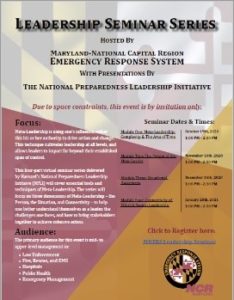 years. Some of the most popular include the Annual Maryland-National Capital Region Emergency Response Symposium and the 2019 Fall Leadership Seminar. Participants in these programs consistently requested more opportunities for leadership education and development. These requests drove MDERS, in partnership with Harvard University’s National Preparedness Leadership Initiative (NPLI), to recently host a four-part Virtual Emergency Response Leadership Seminar Series for leaders in the National Capital Region (NCR). The series included essential tools and techniques of Meta-Leadership.