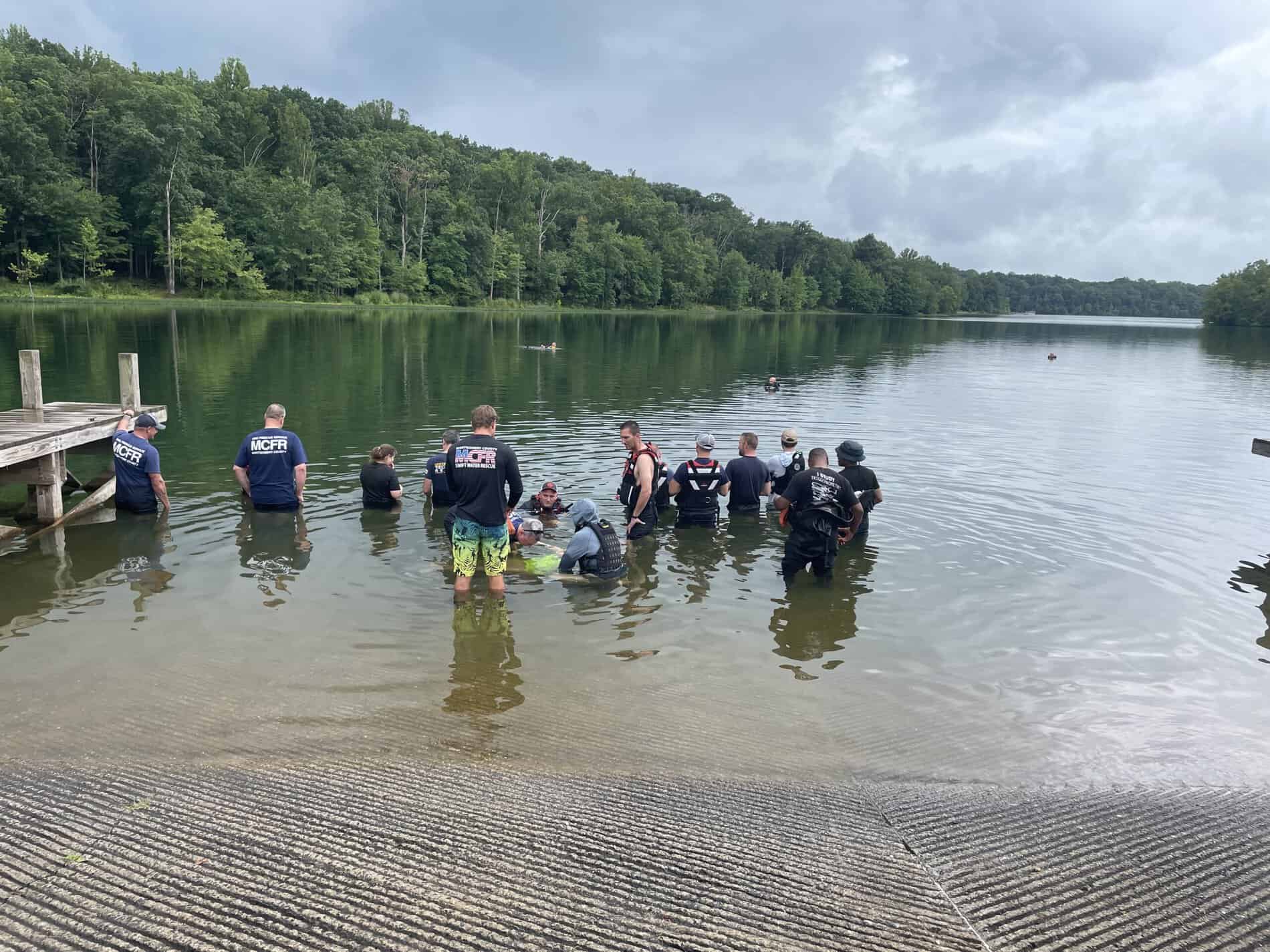
The Maryland-National Capital Region Emergency Response System (MDERS) supported a sonar training for the Montgomery County Fire and Rescue Service (MCFRS), Montgomery County Police Department (MCPD), Prince George’s County Fire/EMS Department (PGFD), and Prince George’s County Police Department (PGPD). Participants learned to operate the AquaEye platform, a handheld sonar device designed to enhance search operations in bodies of water. The training elevated aquatic rescue techniques and tactics while providing first responders throughout the Maryland-National Capital Region (MD-NCR) with an additional tool for water rescue and recovery operations.
The MD-NCR has several rivers, ponds, and other waterways. The largest, the Potomac River, is incredibly treacherous at certain locations. Three individuals have perished this summer in the Great Falls portion of the river, underscoring the need for first responders to be prepared for marine operations. Underwater searches can be an arduous and dangerous process, with submerged hazards, limited visibility, strong currents, and difficult water conditions.
Expediency is critical when reaching a drowning person or recovering a deceased individual. The AquaEye device is a handheld sonar system that can be submerged to scan an area and detect anomalies below the waterline. The platform displays sonar detections on the device’s screen to guide rescue efforts in a more methodical manner. For larger operations, multiple AquaEye devices can be connected through a mobile Command Hub application to provide leadership real-time search data imposed over a map of the location.
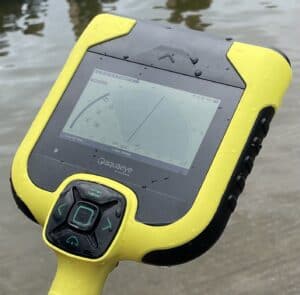
AquaEye Screen
The training included classroom instruction and hands-on portions in the Seneca Little Lake and Potomac River. Conducting exercises in two different bodies of water allowed participants to operate the equipment under varying conditions and gain practical experience using the technology in different environments. Participants not in the water used the Command Hub to understand how the platform interconnects with the devices to create a broader operational picture for departmental leadership.
Participants reported that the training improved their understanding and proficiency with both the AquaEye device and Command Hub platform. Integrating this technology into existing aquatic rescue capabilities will provide first responders with an additional resource for locating individuals underwater, support more efficient search operations, and enhance responder safety during challenging water rescue and recovery missions.