
From May to September 2026, MDERS staff participated in several new and innovative training opportunities. These trainings directly support current stakeholder development projects, strengthen skills, and increase responders’ knowledge in the National Capital Region (NCR). Some of these trainings are provided by organizations in emergency management, emergency services, and other bringing fresh perspectives, new viewpoints, and topics not often covered in current educational settings.
Engagement and continued educational opportunities with stakeholders and members of the homeland security enterprise is vital for the NCR to universally elevate understanding to new and evolving threats. Director Lauren Collins and Senior Emergency Response Specialist Elizabeth Adams worked with representatives from the Maryland Region V Healthcare Coalition to plan the inaugural DiasterPiece Conference. The two-day event covered a range of topics including presentations on Unified Command, cybersecurity, active shooter response, donation management, novel drug threats, and key remarks from Maryland Department of Emergency Management Secretary (MDEM) Russell Strickland and retired United States Capitol Police Chief Tom Manger.
Learning opportunities are not confined to current professionals but includes outreach to inspire and inform the next generation of leaders. Elizabeth Adams and Emergency Response Specialist Katie Dwyer both played pivotal roles with the HERoes on the HERizon Camp. This five-day event brings together public safety agencies and young women across Maryland to engage in hands-on activities, interactive workshops, and field trips led by industry professionals. During the camp, participants had the opportunity to learn about emergency preparedness, leadership skills, crisis communications, and life-saving skills such as CPR. Additionally, throughout the camp, students had the opportunity to visit various public safety agencies and critical infrastructure facilities throughout the NCR to better understand the role these areas play in local and regional response.
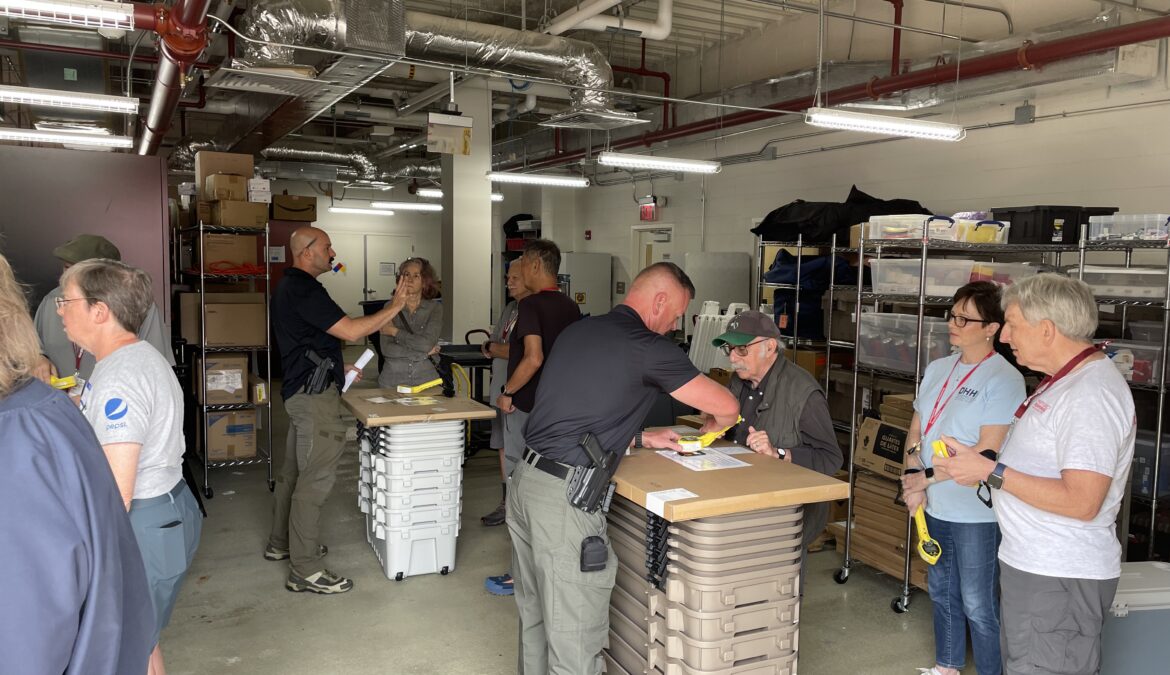
Participation in training and conferences is important for MDERS staff and stakeholders to enhance professional growth and discipline-specific mastery. The MDERS Operational Support Directorate has overseen a robust training and exercise budget. Staff have observed a sonar detection course and Matt Panagos was able to participate in a First Receiver Operations Training (FROT). This training develops the skills for first responders and hospital staff to successfully manage a radiological emergency and influx of contaminated community members.
First responders in the NCR have managed large and small response efforts to aviation related emergencies. The 2025 mid-air collision between an American Airlines jet and a U.S. Army helicopter in the Potomac River, the 2022 plane crash into power lines in Gaithersburg, and several recent small aircraft emergency landings at the Montgomery County Airpark require specialized training and coordination. To understand the complexities involved in these emergencies, MDERS Emergency Response Specialist Matt Panagos and intern Kayla F. have both participated in training provided by the Federal Aviation Administration (FAA). This multi-part series covers aircraft emergencies, 911 response, and emotional impacts to disasters. The informative series elevates the MDERS staff’s comprehension of the layers of difficulties in aviation emergency responses.
MDERS staff members have also attended events including the Maryland Emergency Management Association’s (MDEMA) 40th Annual Maryland Emergency Management and Homeland Security Symposium, Security Industry Association’s (SIA) GovSummit, and numerous virtual lectures. MDERS Senior Emergency Response Specialist Elizabeth Adams also participated in the Emergence Program at the Center for Homeland Defense and Security (CHDS). The Emergence Program focuses on new trends in homeland security and national defense, allowing participants to develop new ways to combat the crises of tomorrow while also networking and learning from other jurisdictions on both regional-specific and national and world threats. This focus on up-and-coming emergency areas allows greater stakeholder support to ensure the safety and security goals of the NCR are met and improved to suit trending data.
MDERS staff has also benefitted from professional development opportunities. Financial Manager Joe Coyne is focusing on becoming a Certified Government Financial Manager (CGFM). The CGFM process validates expertise in governmental accounting, auditing, financial reporting, internal controls, and budgeting at the federal, state, and local level. Additionally, Joe participated in a “Management in the 21st Century” course at Montgomery College, focusing on personnel development skills, developing organizational goals, and increasing employee productivity.
Finally, Deputy Director William “Abe” Abuelhawa partook in a two-day Modern Public Safety Summit managed by the University of Virginia. This collaborative program brought together industry executives, government agencies, and subject matter experts to discuss the impact of artificial intelligence, emerging technologies, workforce transformation, cybersecurity, community expectations, and modern operational strategies. This program offers a chance to learn from other agencies, build relationships, and gain insights to various techniques and technologies to manage a rapidly changing public safety landscape.
Aside from these major opportunities, staff participated in various independent study areas including emergency management, cybersecurity, national security law, decontamination, and leadership courses.
With September marking National Preparedness Month, these innovative trainings allow MDERS staff to serve stakeholders and ensure broader emergency preparedness within the NCR. These programs have looked at new operational tactics, data on human impacts, and collaboration with subject matter experts, which translates to the knowledge and resources needed to serve stakeholders. While preparedness should not just be focused on one month, this period allows for heightened education and training to ensure all are ready when the unexpected happens. With public safety a constantly changing environment, keeping ahead of trends and new technology, as well as potential operational concerns, is critical to all. Most importantly, the knowledge and skills from these trainings are already in place, supporting stakeholder agencies with operational planning, documentation support, and training exercises demonstrating immediate, positive impact to the community.
Written by Matt Panagos