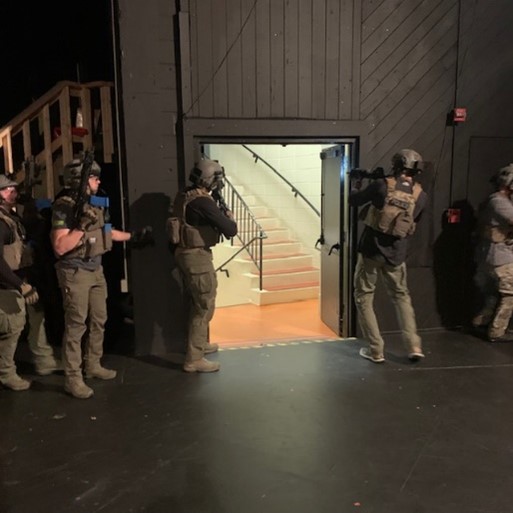
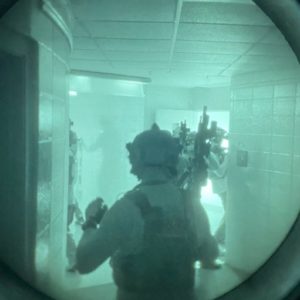
Montgomery County Police Department (MCPD) has built a comprehensive training program for their special operations division (SOD) personnel. With support from the Maryland-National Capital Region Emergency Response System (MDERS), 18 officers from MCPD recently participated in a local offering of the Tomahawk Close Quarter Clearance (CQC) – Methodical Clearance Course. This training combines best practices and techniques for tactical entry and follow-on movement procedures.
This five-day course provides field-based training for law enforcement organizations to establish and refine standard operating procedures (SOPs) for CQC methodical and threshold clearance. Students learned several essential tactical skills, including threat priorities, use of cover, room entries, and follow-on movement.
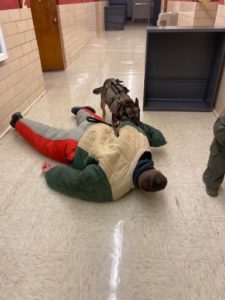
The training occurred across five disparate locations throughout Montgomery County. The distinctive floorplan of each facility allowed operators to maneuver in diverse environments. The instructors provided real-time feedback to each trainee and the unit’s performance in the following areas: two-four-person room entries, room pie methods, angles/cross-pan, multiple rooms, de-confliction, stairway/hallway movement, single/dual access, and team size movement.
MCPD has made great strides by expanding its close-quarter clearance capabilities to include night vision operations. While the focus of CQC is on tactical entry and follow-on movement, it requires proficiency in observation, intelligence gathering, and operational planning. The local delivery of the Tomahawk CQC – Methodical Clearance Course allowed MCPD to train officers as a group and highlighted the need for more team-based training.
With the completion of the Tomahawk CQC – Methodical Clearance Course, MCPD understands the need to build/enhance competency in key areas of CQC.
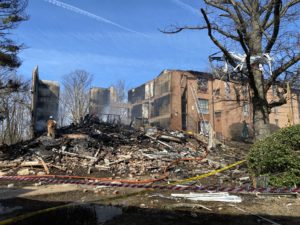
On March 3, 2022, an explosion occurred at Friendly Garden Apartments on Lyttonsville Road in Silver Spring, MD, igniting a large-scale structure fire that injured 14 individuals and displaced an estimated 200 residents. As the fire consumed the four-story building, which ultimately resulted in a near total collapse of the structure, first responders on-scene deployed small unmanned aerial systems (sUAS) to support information gathering and situational awareness to aid in rescue operations.
Over the past four years, Montgomery County Police Department (MCPD), Montgomery County Fire and Rescue Service (MCFRS), and Montgomery County Office of Emergency Management and Homeland Security (OEMHS) have partnered with the Maryland-National Capital Region Emergency Response System to develop, deploy, and expand their sUAS capabilities. With a focus on information gathering and shared situational awareness, MDERS and Montgomery County collaborated to develop a systematic framework that provided the planning, training, and equipment necessary to support emergency response operations. The capabilities provided through MDERS, including sUAS platforms, peripheral accessories, software systems, and support equipment were heavily relied upon during the Lyttonsville Road incident.
MCPD and MCFRS utilized their sUAS platforms to live-stream a 360-degree view of the incident scene to the Incident Command Post (ICP). Through the DroneSense software, the Incident Commander and other responders were able to remotely access and view this secured, live footage to aid in time-sensitive decision making. MCPD, in coordination with MCFRS, utilized mounted thermal imaging devices to identify “hotspots” within the structure fire that aided the prioritization of fire suppression activities to critical locations within the apartment complex. Simultaneously, MCPD deployed a secondary sUAS platform to conduct mapping missions, supported by specialized software, intended to aid the investigation process. Throughout the entirety of the Lyttonsville Road response operations, MCPD utilized a specially outfitted Chevrolet Tahoe, provided through MDERS, equipped with spare parts, extra batteries, chargers, and specialized tools to support sUAS flight operations.
The Lyttonsville Road explosion and fire demonstrates the value of sUAS capabilities in emergency response operations. The continued implementation of sUAS capabilities within public safety agencies minimizes the risk of injury to responders while increasing situational awareness, allowing responding agencies to formulate an appropriate intervention in complex and evolving environments.
The Maryland-National Capital Region Emergency Response System (MDERS) was instituted to optimize emergency response to routine and large-scale incidents by facilitating collaboration between emergency management, fire/rescue/emergency medical services, law enforcement, public health, and healthcare agencies within Montgomery and Prince George’s Counties. In coordination with a Steering Committee, comprised of representatives from stakeholder agencies, MDERS identifies priority response capabilities within the region that require additional development and expansion. These capabilities and associated objectives are outlined in the MDERS Strategic Plan, which identifies measurable target outcomes for each area of response.
To meet the goals and objectives outlined in the Strategic Plan, MDERS has established a capability development process which builds, implements, and sustains critical response capabilities. At the core of the capability development process is the POETEE model, detailed in Figure 1 below, which consists of Planning, Organization, Equipment, Training, Exercise, and Evaluation.
Figure 1: POETEE Model
MDERS’s organizational structure is built around this model with three distinct, yet constantly overlapping, programs: Planning and Organization, Finance and Logistics, and Training and Exercise. These three programs work together throughout the capability development lifecycle to ensure all facets of a capability are being fully addressed.
The Planning and Organization Program oversees the drafting and implementation of comprehensive Capability Development Plans (CDPs) that identify the region’s strategy for meeting the desired capability targets. These plans identify in detail each aspect of the planning, organizing, training, exercising, equipping, and evaluating that will be necessary to accomplish target capability outcomes from the region’s emergency response agencies. The Finance and Logistics Program works through the entire capability development cycle, overseeing the creation of budgets; submission of proposals; and purchasing, deployment, and sustainment of equipment. Additionally, the Finance and Logistics Program oversees the grant administration and reimbursement for all MDERS-funded programs. The Training & Exercise Program coordinates with the Steering Committee, stakeholder agencies, the Planning and Organization Program, and the Finance and Logistics Program to deliver training and exercise opportunities that enhance the knowledge, skills, and abilities of regional emergency responders to support targeted capabilities as identified in the MDERS Strategic Plan and specific CDPs. Throughout this lifecycle, MDERS staff serve as project managers overseeing the long-term development and implementation of the elements outlined in the CDPs.
MDERS continues to successfully apply and adapt the capability development process across the Maryland-National Capital Region response enterprise to better strengthen our stakeholder’s ability to respond to a multitude of planned and unplanned emergency operations.
On January 22, 2022, a member of the Magruder High School security team identified a student suffering from a gunshot injury in a school bathroom. The school nurse deployed compressed gauze from the nearby Public Access Trauma Care (PATC) kit to provide life-saving treatment to the injured student prior to the arrival of first responders on-scene.
The PATC kits, found in all Montgomery County public high schools, are one component of the larger PATC program administered by the Maryland-National Capital Region Emergency Response System (MDERS). The PATC program aims to empower community members throughout Prince George’s and Montgomery Counties to respond to life-threatening blood loss, or other common forms of trauma, through the deployment of medical equipment, training, and other educational resources. Currently, MDERS and its stakeholders are focused on the continued proliferation of PATC kits throughout government buildings and other public facilities across the Maryland-National Capital Region.
Montgomery County Police Department (MCPD), Montgomery County Fire and Rescue Service (MCFRS), school officials, and other county leaders placed Magruder High School on lockdown upon identification of the gunshot injury. MCPD began conducting witness interviews and searching the school grounds while MCFRS transported the injured student to a nearby trauma center. MCPD ultimately located and apprehended a suspect with a firearm in one of the school’s classrooms.
In addition to PATC, Montgomery County applied numerous capabilities developed or enhanced through MDERS, including Tactical Equipment for Law Enforcement, Intelligence and Information Sharing, and Incident Command System components.
For more information on the Public Access Trauma Care program, or other emergency response capabilities, please email mders@maryland.gov.
The Maryland-National Capital Region Emergency Response System (MDERS) is proud to announce the continued expansion of its Public Access Trauma Care (PATC) program through the publication of the Maryland Public Access Trauma Care mobile application. This application builds upon the deployment of trauma kits, resources, and training opportunities throughout the region by providing a supplemental, on-demand educational resource to citizen responders.
The Maryland Public Access Trauma Care application is organized into three sections: In an Emergency, PATC Training, and Resources. Each section consists of a variety of interactive tools, references, and videos to provide users with the knowledge, skills and abilities required to save an individual suffering from life-threatening trauma. These sections are further detailed below.
In an Emergency
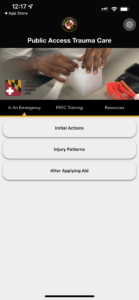
The In an Emergency section of the application outlines easily navigable, step-by-step instructions for users to follow when confronted with a bleeding victim. This section is further organized into three subsections: Initial Actions, Injury Patterns, and After Applying Aid. Through these subsections, the application outlines primary actions that a citizen responder should take when responding to any victim, high-level medical instructions for responding to four major injury patterns, and a list of actions to be taken after delivering immediate medical aid.
Each medical procedure contains a link to the corresponding training video to ensure that user can quickly review, listen to, and/or visualize the appropriate actions to be taken.
PATC Training
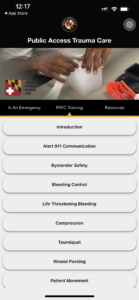
The PATC Training section of the application educates individuals on the various medical procedures that may be involved when responding to a major bleeding injury. These trainings encompass numerous aspects of responding to a medical emergency including assessing the scene for safety risks, alerting 9-1-1, identification of common injury patterns and locations, application of appropriate medical procedures, common medical equipment used to treat bleeding victims, and more.
Resources
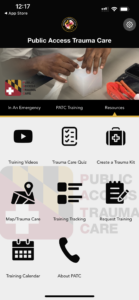
The Resources section provides users the ability to expand upon, strengthen, and evaluate their mastery of the concepts taught in the PATC Training section of the app. This section includes detailed training videos for identified medical procedures, an interactive quiz to test the user’s knowledge, a map of National Capital Region hospital locations, and information on creating a trauma kit. Additionally, users can identify ongoing training opportunities or even request an in-person training event.
The Maryland Public Access Trauma Care app can be downloaded in the Apple App Store and Google Play Store today.
In Fiscal Year (FY) 2014, the Maryland-National Capital Region Emergency Response System (MDERS) Steering Committee identified the need to increase the ability of law enforcement officers across the region to respond to and provide life-saving medical interventions during high-threat or hot-zone response operations. To meet this need, the MDERS Steering Committee established Tactical Emergency Casualty Care (TECC) as a priority capability for enhancement and increased investment.
TECC is a civilian-oriented adaptation of the military’s Tactical Casualty Combat Care (TCCC) which establishes a framework to balance the risks and benefits of medical response and provides guidance on medical intervention for preventable deaths during warm/hot zone operations. The development of this capability rapidly expanded across multiple fiscal years and disciplines, supporting significant life-saving care throughout the region.
Figure 1: Police Officer Trauma Kit
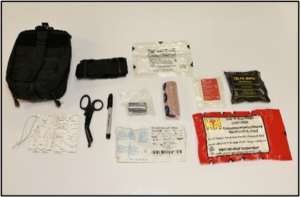
The Maryland-National Capital Region Emergency Response System’s TECC program initially provided training and medical supplies for 4,850 law enforcement officers across 44 county, municipal, state, and regional law enforcement agencies. The TECC training taught officers how to identify severe bleeding injuries and determine which medical supplies to deploy. After successfully completing the required training, every officer was outfitted with a Police Officer Trauma Kit that contains two tourniquets, hemostatic gauze, a chest seal, an H-style bandage, additional accessories, and basic personal protective equipment. Through this combination of training and equipment, law enforcement officers across the Maryland-National Capital Region are able to administer initial, life-saving medical care to injured persons.
The early success of the TECC capability prompted its expansion to local fire departments in FY 2016. Through the TECC program, fire personnel received supplemental training on the identification of injury patterns and rendering of proper care. Additionally, over 600 TECC kits were distributed to each fire apparatus and ambulance within the Maryland-National Capital Region. This allocation of training and medical equipment elevated the capabilities of fire personnel to render medical care before transport to definitive care.
In tandem with the expansion to local fire departments, healthcare facilities within the Maryland-National Capital Region were also allocated TECC equipment to increase their medical caches. Each hospital received 100 tourniquets, 100 rolls of hemostatic gauze, and 100 pressure dressings to ensure their ability to provide life-saving hemorrhage control during a surge or no-notice trauma event.
Since the inception of the program, law enforcement officers have deployed their TECC training and equipment numerous times to provide immediate medical interventions to victims. In the first three years of the program, officers from the Prince George’s County Police Department deployed their trauma kits 70 times. More recently, a Montgomery County Police Department officer deployed TECC supplies to a multiple gunshot victim in the Germantown area, providing on-scene, life-saving intervention.
Yesterday, Montgomery County Police Officer K. Berry responded to a shooting in Germantown. The Officer located a male who had been shot multiple times. Officer Berry, along with an off-duty MCP Officer, provided life saving aide to the victim before Fire Rescue arrived.#mcpnewspic.twitter.com/P4uKu3g7pB
— Montgomery County Department of Police (@mcpnews) February 7, 2022
The training and supplies that have built the TECC capability have enabled first responders to administer invaluable initial medical care to victims. As the capability continues to expand, law enforcement officers and fire and rescue personnel from across the Maryland-National Capital Region continue to deploy TECC skills supplies on a near-daily basis.
In Fiscal Year (FY) 2013, Prince George’s County Fire and Emergency Medical Services (EMS) Department (PGFD) began a pilot program to assess the efficacy of the FirstWatch real-time situational awareness application. Supported by Maryland-National Capital Region Emergency Response System (MDERS) funds, this program aimed to provide PGFD leadership with a near-real-time view of the department’s operations that could be accessed through a single platform.
Previously, leaders relied upon multiple sources of information such as Computer Aided Dispatch (CAD) Systems, electronic Patient Care Reporting (ePCR), Records Management Systems (RMSs), and other platforms to determine the status of the department’s operations and performance. The reliance on numerous sources of information to maintain a holistic view of current operations created significant challenges in maintaining real-time situational awareness. FirstWatch resolves these challenges by integrating multiple data sources and combining all data inputs into actionable information via an internet browser or mobile application.
Real-Time Situational Awareness and Data Analytics
FirstWatch connects to data feeds from CAD systems, ePCR, and RMSs to provide real-time situational awareness. The FirstWatch platform aggregates these data feeds into a single stream of actionable information that authorized users can access. Additionally, FirstWatch conducts pre-configured analyses of the aggregated data and notifies identified personnel when user-defined trigger points are met or exceeded. An example of one such trigger is when a specified number of ambulances are unavailable for dispatching due to current use on calls or based on an out of service status.
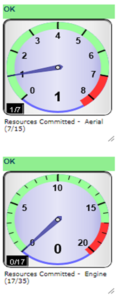
Figure 1: FirstWatch Gauges
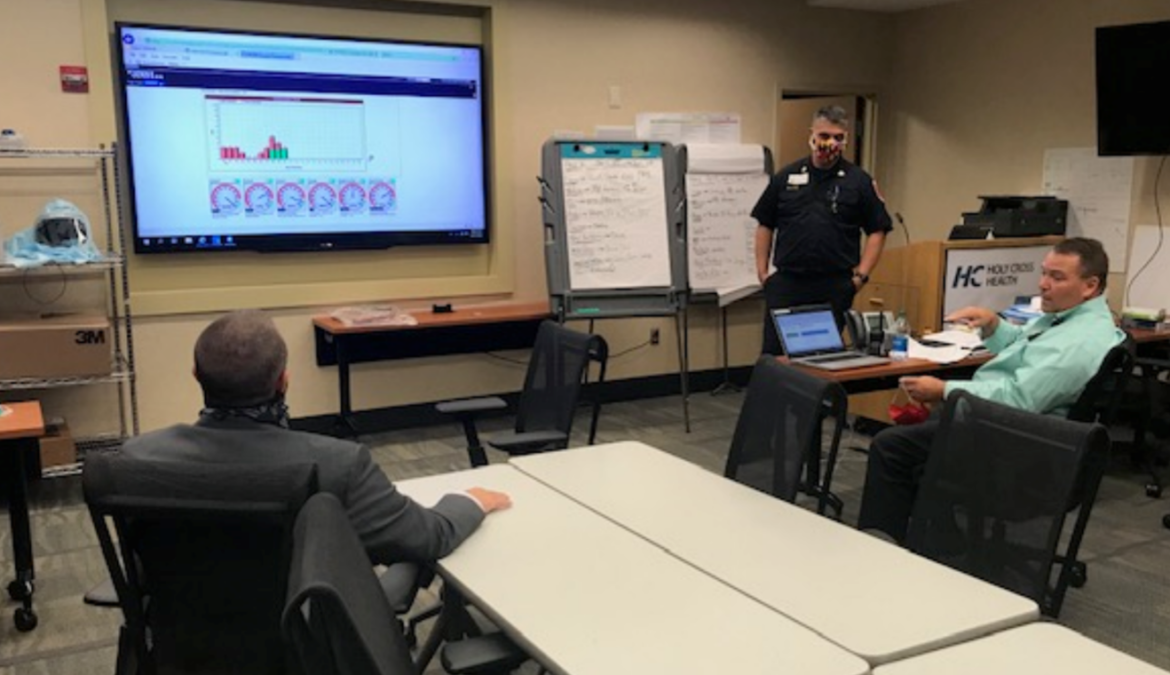
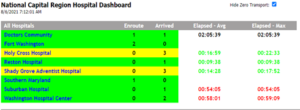
In support of its analytics, FirstWatch provides data visualization via gauges, dashboards, and other tools to provide a more user-friendly interface. Gauges, shown in Figure 1, illustrate the current capacity of an identified trigger threshold. Dashboards, as shown in Figure 2, synthesize larger, more complex data to provide a comprehensive overview.
One notable dashboard currently deployed within the NCR is the Hospital Transport Status Dashboard. This dashboard provides fire departments and healthcare facilities staff with the awareness of the current number of ambulances at or en route to every hospital within the region at any given time. Data such as arrival on scene, en route to the hospital, arrival at the hospital, and clearing the call times are available for each ambulance from every fire department, with relevant time stamps included for each status change. As many healthcare facilities operate near capacity on a regular basis, this dashboard alleviates potential capacity burdens by providing healthcare and EMS providers with the information to identify service backlogs. Once a backlog is identified, EMS or healthcare providers can divert new patients to other nearby facilities with existing capacity.
Figure 2: Hospital Transport Status Dashboard
Additionally, FirstWatch provides other tools to participating agencies such as automated auditing of ePCRs to ensure quality assurance and quality improvement. Maryland-National Capital Region fire, rescue, and EMS agencies generate thousands of ePCRs annually. Previously, personnel manually audited these records for specific criteria, quality indicators, or other information. The FirstPass module within FirstWatch reviews each ePCR for user-defined criteria and sends automated alerts to relevant personnel, such as the administration of a specific medication or medical intervention. These alerts identify which ePCRs may require manual review or follow-up with providers, patients, or healthcare facilities.
FirstWatch within the Maryland-National Capital Region
In the Maryland-National Capital Region, PGFD and Montgomery County Fire Rescue Service (MCFRS) leadership utilize the FirstWatch application daily to maintain awareness on current operating status. Field personnel rely on the information collected by the FirstWatch application to make informed decisions regarding patient transport destination, offload, and transfer time, thus improving the availability of ambulances across the region.
In addition to Montgomery and Prince George’s Counties, the MDERS FirstWatch program provides FirstWatch licensing, maintenance, and access for the entire National Capital Region, including:
District of Columbia
City of Alexandria
Arlington County
City of Fairfax
Fairfax County
Loudon County
Prince William County
Each jurisdiction’s fire, rescue, and EMS system can further customize FirstWatch better meet individual data needs and inform decision making. As FirstWatch develops new tools to assist public safety, agencies within the National Capital Region will continue to advance their use of the program to provide enhanced situational awareness across the region.
Severe bleeding, penetrating wounds, hypothermia, and other life-threatening trauma can occur at any time, and require immediate medical attention. To better empower the general population of Prince George’s and Montgomery Counties to recognize and respond to life-threatening trauma in the vital minutes before first responders arrive, the Maryland-National Capital Region Emergency Response System (MDERS) developed the Public Access Trauma Care (PATC) program.
Through the PATC program, MDERS deployed trauma care kits in public buildings, schools, and government facilities across the Maryland-National Capital Region. In addition to providing the kits, MDERS is training the population on the skills and abilities required to render aid, through five training videos that were recently released.
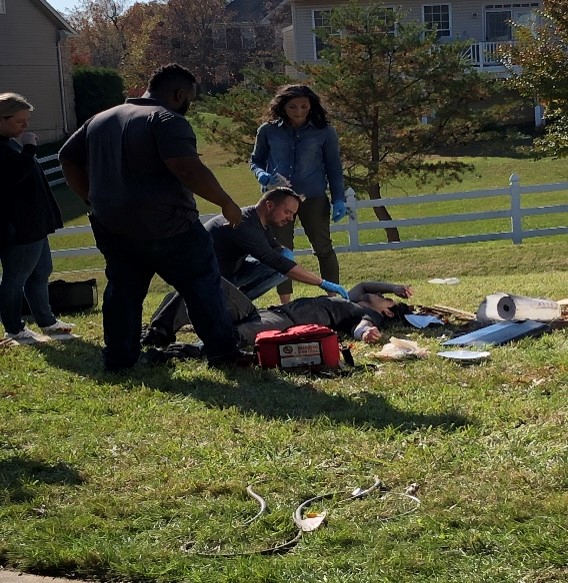
The videos show the proper techniques and tools to treat life-threatening injuries using the equipment and supplies provided in the PATC kits. Students learn how to accurately identify the type and extent of an injury, how to render aid, and which bandages and supplies to use. The five training videos teach individuals how to apply a chest seal, apply a tourniquet, pack a wound, apply direct pressure, and maneuver a victim into the recovery position. Each video demonstrates the application of a skill with detailed narration explaining each step taken by a citizen responder.
To underline the importance and broad applicability of these skills, a propane gas explosion scenario was utilized. In this scene, two individuals applied the proper trauma care techniques on two victims before medical professionals arrived on scene. In this simulated scenario, the interventions by the bystanders saved lives.
All members of the public are encouraged to learn these simple life-saving skills. The training videos and emergency scenario can be seen on MDERS’s YouTube page. The videos can be watched for initial training and reviewed for individuals to refresh their familiarity with the life-saving PATC skills.
The MDERS team would like to extend its gratitude to the Montgomery County Police Department, Prince George’s County Police Department, Prince George’s County Fire/EMS Department, and Laurel Volunteer Fire Department for their time and expertise in creating these videos.
The 14th Annual National Homeland Security Conference (NHSC) was recently held in Las Vegas, Nevada from August 30th, 2021, to September 2nd, 2021. The NHSC is an annual event sponsored by the National Homeland Security Association that is designed to bring together professionals from across the homeland security enterprise. Each year, the NHSC provides a variety of trainings, breakout sessions, dynamic keynote speakers, and tours of local target hazards or previous pertinent events to educate and provide information on topics ranging from cybersecurity to counterterrorism and grants management. The Maryland-National Capital Region Emergency Response System (MDERS) sponsored the attendance of 16 stakeholder agency personnel, as well as MDERS staff members.
This year’s NHSC participants attended presentations on unmanned aircraft systems, the COVID-19 pandemic, domestic violent extremist, cyber security, and more. The evaluations reflected that the participants benefited greatly from attending these sessions. Some comments include:
“I have a greater understanding of the capabilities and threats posed by unmanned systems. I also learned about existing and emerging technologies and the capabilities utilized to remediate these systems.”
“I enjoyed the session on planning for a multiple agency response exercise. The speaker gave me a better idea on how to get the agencies I would need in participation on board.”
Kinetic Mobile Tabletops: The Answer to Crawl Walk Run
At this year’s NHSC, MDERS Emergency Response Planner Michael Ryman, and Montgomery County Fire and Rescue Service (MCFRS) Captain Dwayne Dutrow, presented a breakout session titled: Kinetic Mobile Tabletops: The Answer to Crawl, Walk, Run. This hour-long session covered the three-year development of the MDERS Tabletop in a Box program and how it can be deployed as a systematic, scalable, and economical capability development tool across various emergency response disciplines. The presentation concluded with a review of real-world success stories from personnel who participated in various iterations of the MDERS Tabletop in a Box Program.
The MDERS Tabletop in a Box program is a coordinated effort with stakeholder agencies to provide a portable Incident Command System (ICS) training tool. The Tabletop in a Box program includes pre-scripted exercises, manipulatives, and maps of target hazard locations within their area of jurisdiction. This programs main tool is a portable box containing all materials required to run a hybrid exercise. This approach provides stakeholders with a forum to discuss, evaluate, and deconflict their response policies and procedures in a collaborative environment.
Since 2018, MDERS has delivered a total of 38 TTXs to law enforcement, fire/rescue/EMS, public health, and hospital stakeholders in the Maryland-NCR.
In response to topics covered at the 2021 Maryland-National Capital Region Emergency Response System (MDERS) Virtual Symposium, the Training and Exercise Team received many requests for follow up presentations. These requests resulted in the creation of the 2021-2022 MDERS Webinar Series.
One of the requests from the MDERS stakeholders was for a follow-on conversation that elaborated in greater detail topics discussed during the 2021 MDERS Symposium. In response, on October 6th, 2021, MDERS hosted the Leveraging Open-Source Intelligence for Preventative Public Safety Purposes webinar in partnership with the New York Police Department (NYPD) Intelligence Bureau’s (IB) Global Trends & Developments Team. The event was attended by 37 stakeholders, representing 25 agencies and numerous disciplines throughout the NCR and the State of Maryland.
NYPD Intelligence Analysts briefed National Capital Region (NCR) stakeholders on current threat assessments for global terrorism and mass violence. They also expanded on topics including racially and ethnically motivated violent extremism, leveraging intelligence by law enforcement, and developing event threat assessments. NYPD utilized recent cases studies, including the January 6 events at the Capitol, to further assess how these concepts should be applied to real-world events.
MDERS collected evaluations from the participants at the end of the webinar to assess the content discussed and to inform future training opportunities. Stakeholder comments from the Leveraging Open-Source Intelligence for Preventative Public Safety Purposes webinar include:
“I learned about catalytic events and how these events may motivate a malicious actor, who may or may not have pre-existing ties to an extremists’ group or ideology.”
“The most valuable part of this training was learning about the available tools for public and private sector, about the catalytic events vs. reactive violence and about the different extremist groups.”
“Each presentation flowed very well into the next presenter and was all relevant without the speaker’s content duplicating. I thought it was great.”
“The most valuable part of this training was learning about the coordination and facilitation of the of sharing of open-source intelligence with the appropriate agencies to assist them with their missions, how to utilize appropriate intelligence information in planning efforts, and how to leverage available tools to assist public safety agencies carry out their mission.”
MDERS will host the second webinar in this training series in early 2022, which will focus on cyber threats and their impacts to homeland security and public safety.
For more information on future webinars and other training opportunities, please contact Hannah Thomas at Hannah.Thomas1@maryland.gov.
 Montgomery County Police Department (MCPD) has built a comprehensive training program for their special operations division (SOD) personnel. With support from the Maryland-National Capital Region Emergency Response System (MDERS), 18 officers from MCPD recently participated in a local offering of the Tomahawk Close Quarter Clearance (CQC) – Methodical Clearance Course. This training combines best practices and techniques for tactical entry and follow-on movement procedures.
 The training occurred across five disparate locations throughout Montgomery County. The distinctive floorplan of each facility allowed operators to maneuver in diverse environments. The instructors provided real-time feedback to each trainee and the unit’s performance in the following areas: two-four-person room entries, room pie methods, angles/cross-pan, multiple rooms, de-confliction, stairway/hallway movement, single/dual access, and team size movement.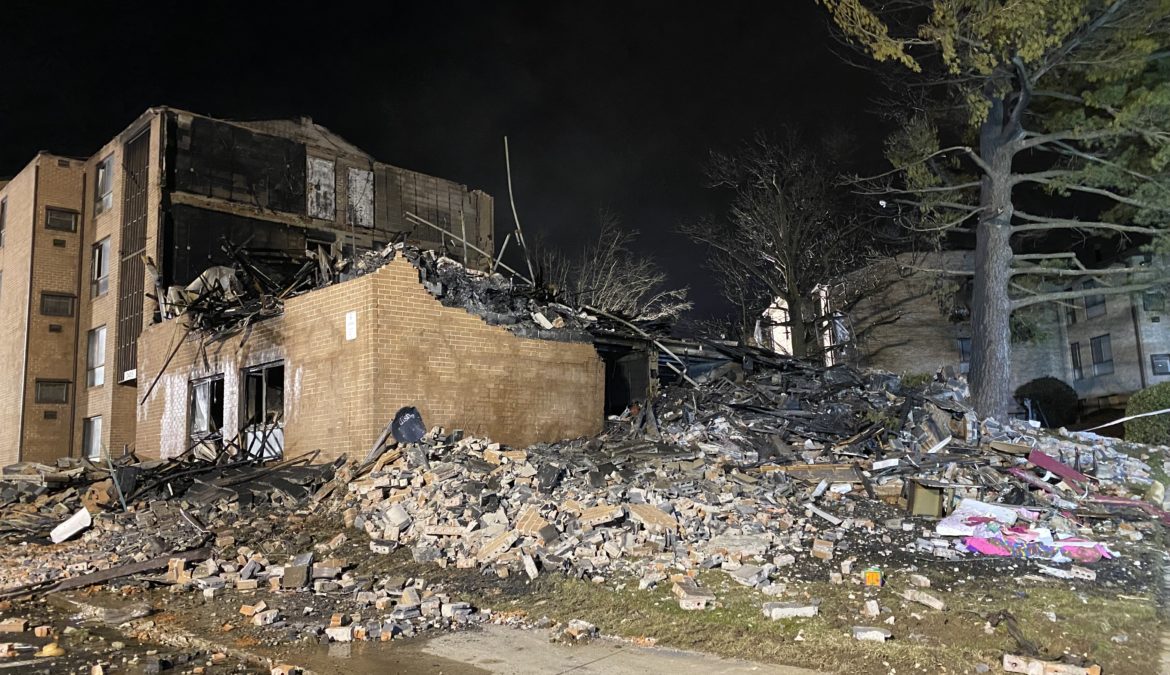
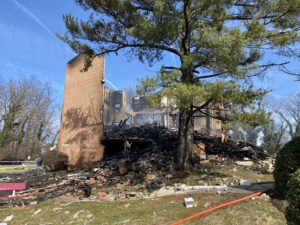 MCPD and MCFRS utilized their sUAS platforms to live-stream a 360-degree view of the incident scene to the Incident Command Post (ICP). Through the DroneSense software, the Incident Commander and other responders were able to remotely access and view this secured, live footage to aid in time-sensitive decision making. MCPD, in coordination with MCFRS, utilized mounted thermal imaging devices to identify “hotspots” within the structure fire that aided the prioritization of fire suppression activities to critical locations within the apartment complex. Simultaneously, MCPD deployed a secondary sUAS platform to conduct mapping missions, supported by specialized software, intended to aid the investigation process. Throughout the entirety of the Lyttonsville Road response operations, MCPD utilized a specially outfitted Chevrolet Tahoe, provided through MDERS, equipped with spare parts, extra batteries, chargers, and specialized tools to support sUAS flight operations.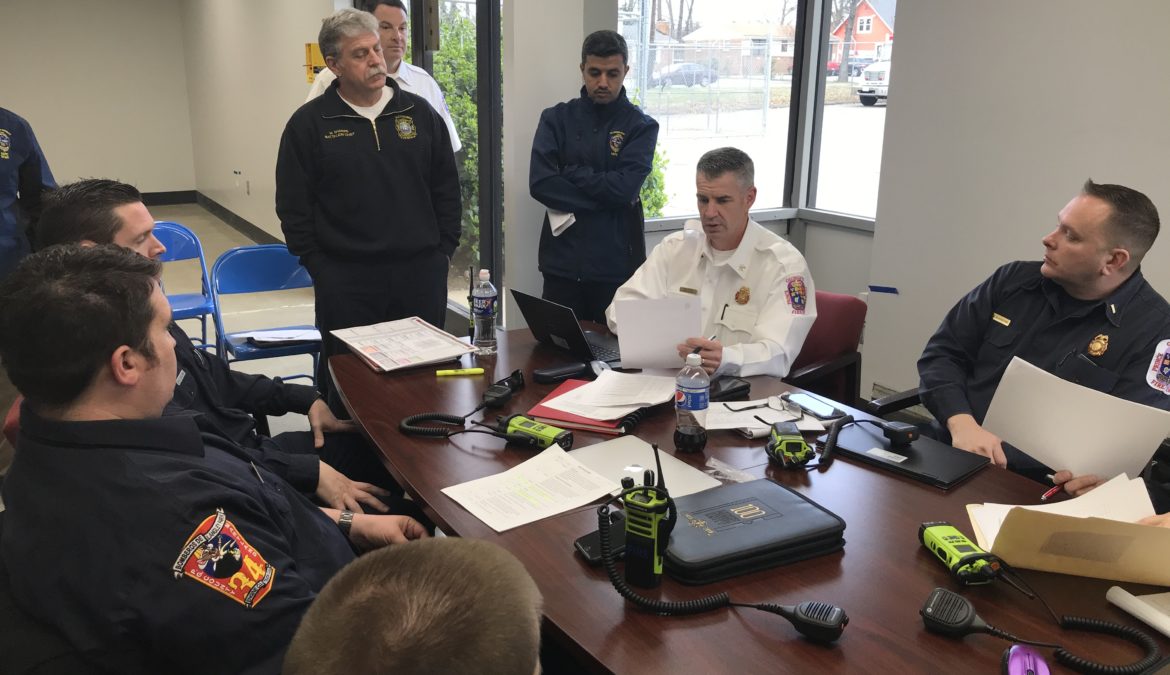

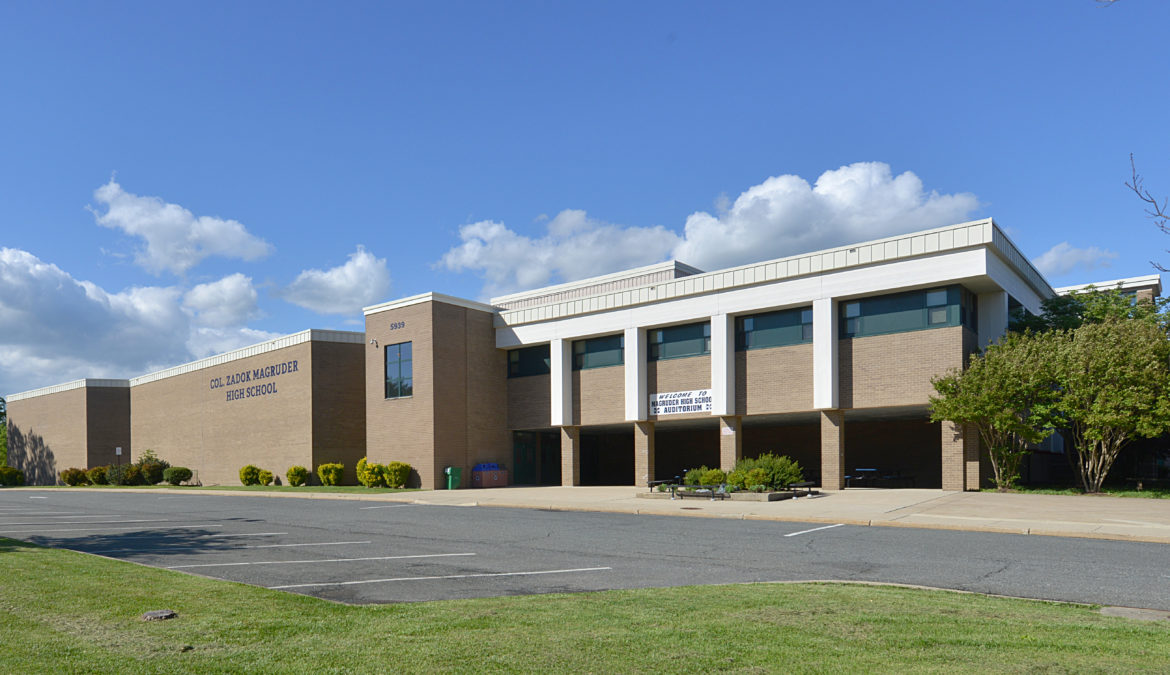
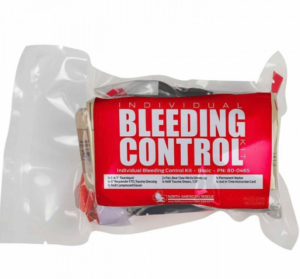 The PATC kits, found in all Montgomery County public high schools, are one component of the larger PATC program administered by the Maryland-National Capital Region Emergency Response System (MDERS). The PATC program aims to empower community members throughout Prince George’s and Montgomery Counties to respond to life-threatening blood loss, or other common forms of trauma, through the deployment of medical equipment, training, and other educational resources. Currently, MDERS and its stakeholders are focused on the continued proliferation of PATC kits throughout government buildings and other public facilities across the Maryland-National Capital Region.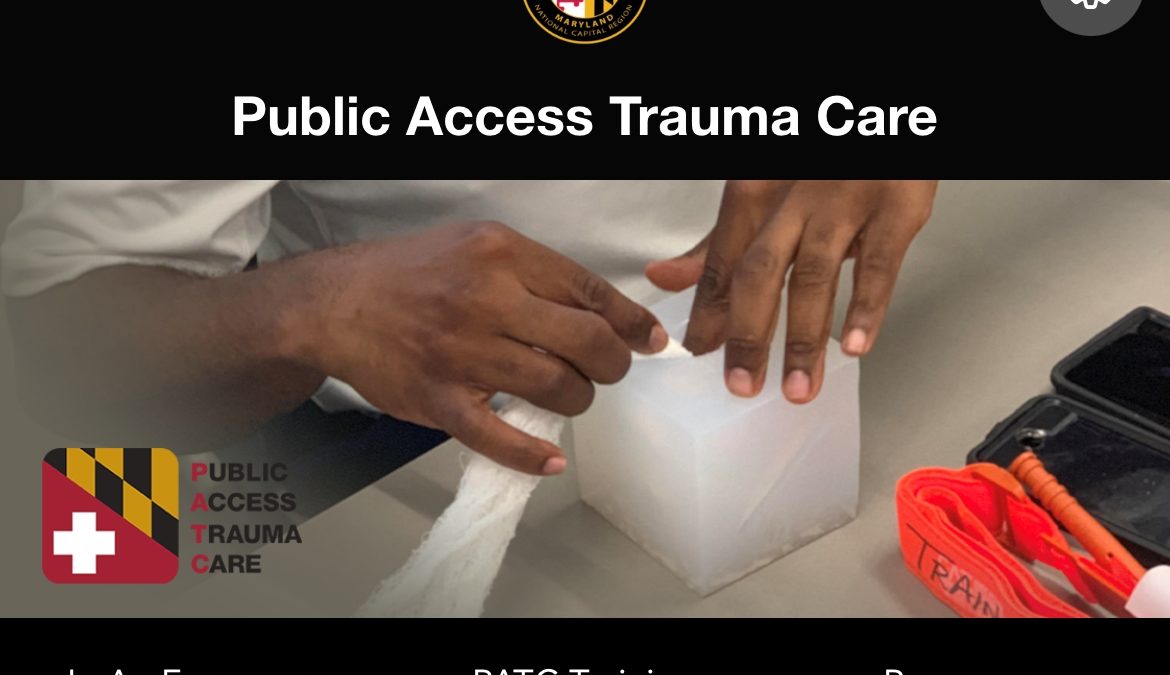
 In an Emergency
 PATC Training
 Resources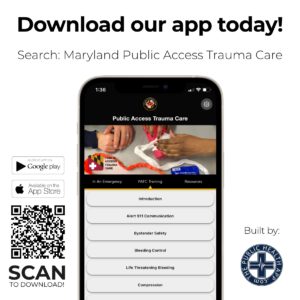
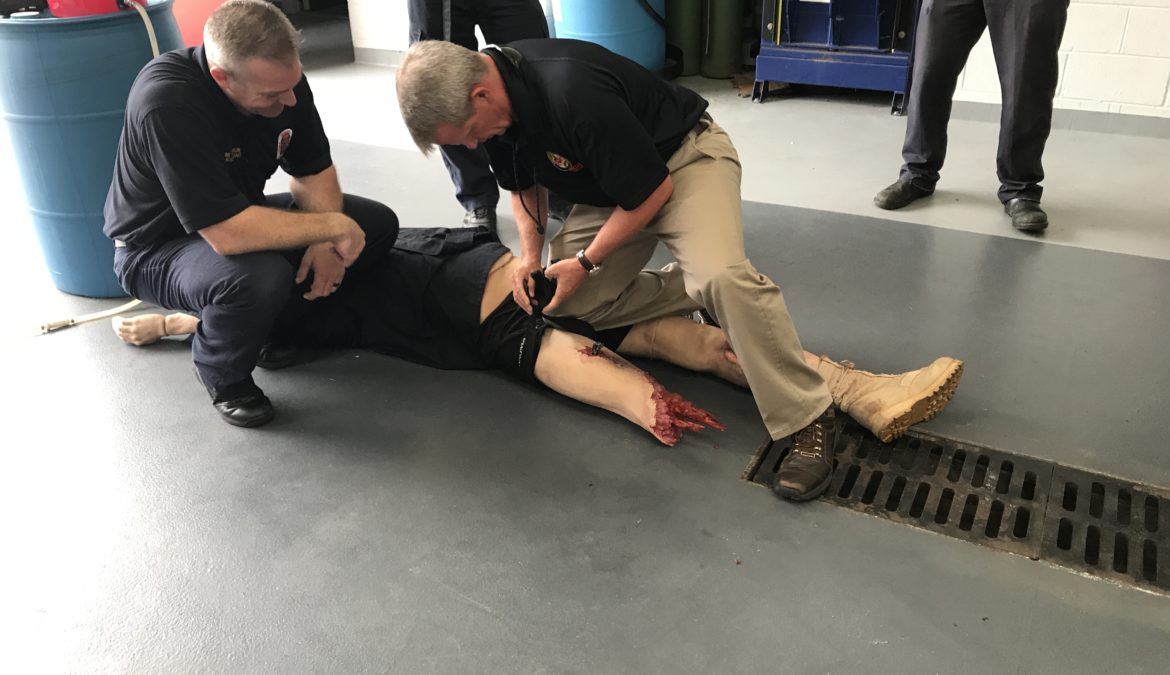
 The videos show the proper techniques and tools to treat life-threatening injuries using the equipment and supplies provided in the PATC kits. Students learn how to accurately identify the type and extent of an injury, how to render aid, and which bandages and supplies to use. The five training videos teach individuals how to apply a chest seal, apply a tourniquet, pack a wound, apply direct pressure, and maneuver a victim into the recovery position. Each video demonstrates the application of a skill with detailed narration explaining each step taken by a citizen responder.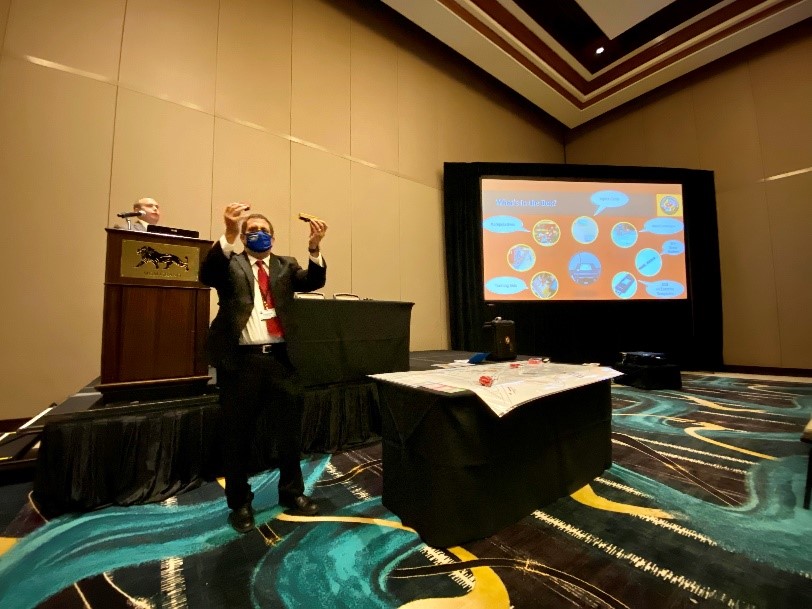
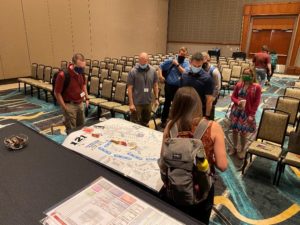 The MDERS Tabletop in a Box program is a coordinated effort with stakeholder agencies to provide a portable Incident Command System (ICS) training tool. The Tabletop in a Box program includes pre-scripted exercises, manipulatives, and maps of target hazard locations within their area of jurisdiction. This programs main tool is a portable box containing all materials required to run a hybrid exercise. This approach provides stakeholders with a forum to discuss, evaluate, and deconflict their response policies and procedures in a collaborative environment.