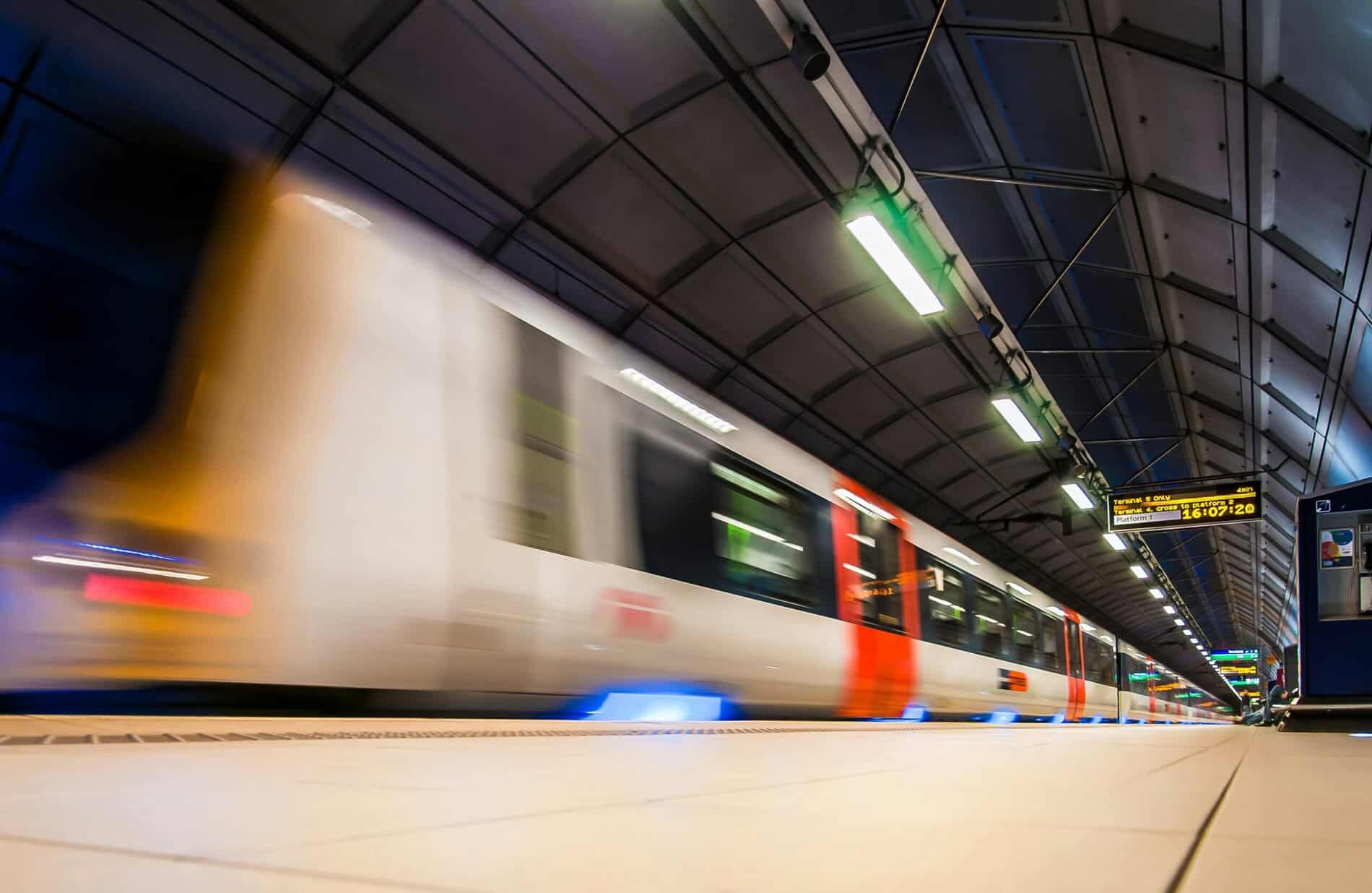
Transportation systems across the United States and the world facilitate the quick and easy movement of people and goods across urban landscapes. Millions of people travel on transit systems each year across major cities, including Washington, D.C. (Washington Metropolitan Area Transit Authority, 2025), New York City (Metropolitan Transit Authority, 2023), and London (Transport for London, 2023). In addition, heavy rail services, such as those provided by Amtrak (Amtrak, 2022) serve millions of riders per year in major metropolitan regions.
System delays, even minor ones, can create significant bottlenecks and overcrowding in stations, trains, and buses. Unexpected mechanical problems experienced within the system can result in large-scale rescue efforts including, but not limited to, entire train or station evacuations. Furthermore, more typical day-to-day incidents, such as medical emergencies, can create a significant drain on a system’s resources in addition to creating delays. In addition to increasing ridership numbers, the impact of violence within transit systems can result in a major emergency response and extended incidents. These may include minor disagreements between two riders or larger, calculated efforts to disrupt the operations of entire cities.
Following the September 11, 2001, terrorist attacks in New York City, Washington, D.C., and Pennsylvania, transit systems worldwide have developed specific security screening procedures and increased security measures. Unlike the Federal Aviation Administration (FAA) and the Transportation Security Administration (TSA), which have a standard screening protocol of all baggage as well as body scanning technology, transit systems are relying on random, uncoordinated security screening (Transportation Security Administration, N.D.). Furthermore, a critical piece of security within a transportation network is the proactiveness of other travelers to “see something, say something” to the nearest public safety officer.
Transit systems have implemented changes to security measures outside of random bag screening. In October 2008, the Washington Metropolitan Area Transit Authority (WMATA) began implementing random bag screening as well as the use of explosive-detecting dogs on trains and station platforms (Washington Metropolitan Transit Authority, 2008). Despite these efforts, the primary focus of transit systems remains the movement of passengers from one location to another as quickly as possible, which has impacted the ability to implement system-wide security screening measures (Washington Metropolitan Area Transit Authority, 2008). Additionally, challenges of random baggage screenings have been identified. Critics of random baggage screening have argued that, in the case of Washington, D.C., the system is less effective in ensuring safety. This is because screenings are only done at a handful of locations throughout the system thus not giving a holistic screening of baggage entering the transit system (Machalaba & Frangos, 2005).
The future of transit safety is new technology. High-speed, full-body screening is being implemented around the world. Similar to airport security screening, but with the ability to move passengers quickly through the system, Beijing, China has successfully integrated comprehensive security screening for all passengers (Beijing Government, n.d.). Beijing utilizes full-body X-ray scanning technology to ensure that individuals and their baggage are free of weapons. A video of the Beijing security screening can be found HERE. In the United States, similar security screening measures are being implemented. In New York City, similar electromagnetic screening systems have been piloted alongside other efforts such as increased security cameras and partnerships with state and federal agencies (Westbrook, et. al., 2024). As a result of these efforts, New York State Governor Kathy Hochul has reported a 42% decrease in crime since January 2021 and a nearly 150% increase in ridership (New York State Governor’s Office, 2024) with noticeable, positive change in New York and Beijing, the future of public transit safety around the world is with new technology that provides a comprehensive security screening while not impacting schedules.
Written by Matt Panagos
References
Amtrak. (2022). Amtrak Fact Sheet: Northeast Corridor Sector. Accessed July 2, 2025 via https://www.railpassengers.org/site/assets/files/3433/nec.pdf
Beijing Government. (N.D.) “Beijing Subway – Precautions on Security Check.” Accessed July 3, 2025. https://english.beijing.gov.cn/specials/beijinglifeonthesubway/noticeforpassengers/202206/t20220623_2749395.html
Machalaba, D, and Frangos, A. (2005). “Vulnerability of rails underscored by attack: Millions of commuters use train and subway systems with no security screening”. Wall Street Journal, Jul 08, 2005. https://proxy.library.georgetown.edu/login?url=https://www.proquest.com/newspapers/vulnerability-rails-underscored-attack/docview/2651601248/se-2
Metropolitan Transit Authority. (2023). Subway and Bus Ridership for 2023. Accessed July 1, 2025 via https://www.mta.info/agency/new-york-city-transit/subway-bus-ridership-2023
New York City Governor’s Office. (December 2024). “Safer Streets and Subways: Governor Hochul, MTA and Law Enforcement Officials Provide Update on Keeping New Yorkers Safe on the Subway Ahead of the Holidays.” Accessed July 1, 2025 via https://www.governor.ny.gov/news/safer-streets-and-subways-governor-hochul-mta-and-law-enforcement-officials-provide-update
Transport for London. (2023). Latest Transport for London Figures show the Tube reaching 4 million journeys per day. Accessed June 30, 2025 via https://tfl.gov.uk/info-for/media/press-releases/2023/november/latest-tfl-figures-show-the-tube-reaching-4-million-journeys-per-day
Transportation Security Administration. (N.D.). Security Screening. Accessed June 29, 2025 via https://www.tsa.gov/travel/security-screening
Washington Metropolitan Area Transit Authority. (2025). Metrorail Ridership Summary. Accessed July 2, 2025 via https://www.wmata.com/initiatives/ridership-portal/Metrorail-Ridership-Summary.cfm
Washington Metropolitan Area Transit Authority. (October, 2008). Metro Transit Police to begin bag inspection program. Accessed June 28, 2025 via https://www.wmata.com/about/news/pressreleasedetail.cfm?ReleaseID=2324#:~:text=The%20Metro%20Transit%20Police%20Department,inspecting%20bags%20for%20explosive%20devices
Washington Metropolitan Area Transit Authority. (October, 2008) “Metro Transit Police to begin bag inspection program.” Accessed June 28, 2025 via https://www.wmata.com/about/news/pressreleasedetail.cfm?ReleaseID=2324#:~:text=The%20Metro%20Transit%20Police%20Department,inspecting%20bags%20for%20explosive%20devices
Westbrook, E., Waller, D., & Kramer, M. (July, 2024). “NYC starts scanning subway riders for weapons. Here’s what to know. CBS News New York. Accessed July 2, 2025 via https://www.cbsnews.com/newyork/news/nyc-starts-installing-subway-weapon-detectors/