Month: September 2025

MDERS Director Lauren Collins Participates in Panel Discussion on Emergency Preparedness

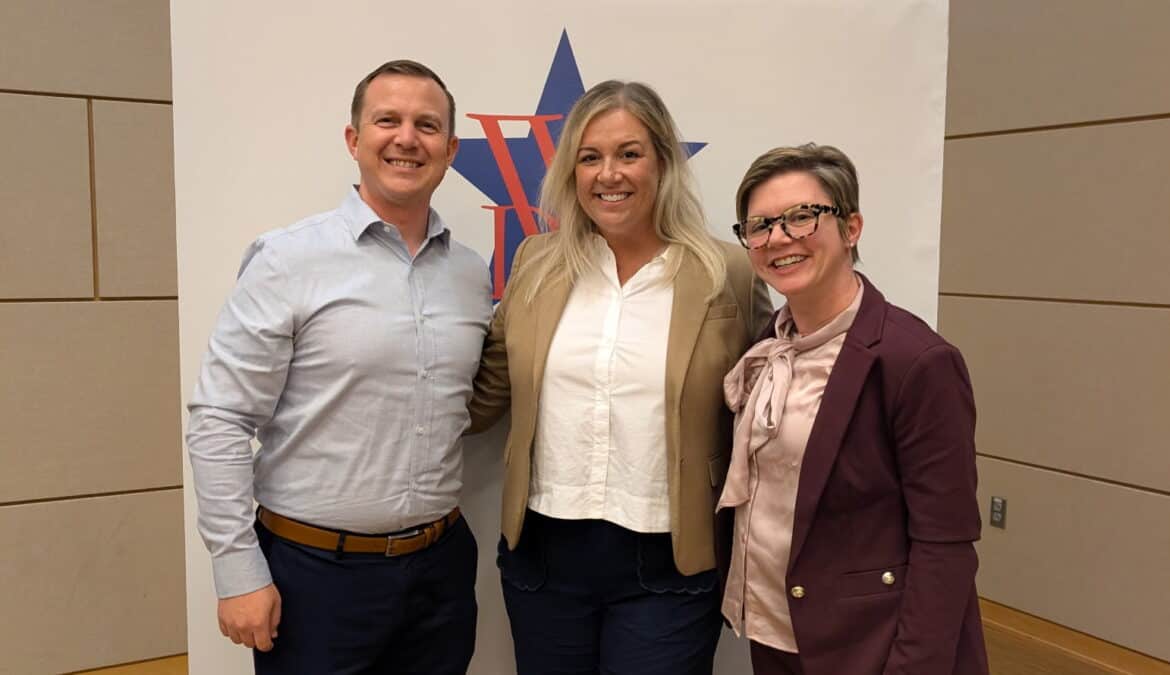
Communities remain in a constant state of flux to adequately prepare for a wide array of evolving and novel emergencies. On the anniversary of the September 11th terrorist attacks, a panel of regional experts shared their insights on the evolution of emergency preparedness since that tragic day. The Maryland-National Capital Region Emergency Response System (MDERS) Director, Lauren Collins, served on the panel to highlight the vital role of collaboration between first responder agencies in the Maryland-National Capital Region (MD-NCR).

Joining Director Collins were Nicole Markuski, Deputy Director of the Montgomery County Office of Emergency Management and Homeland Security, and Travis Nelson, Director of the Governor’s Office of Homeland Security. The panel was moderated by Caitlin Durkovich, former Deputy Assistant to the President and Deputy Homeland Security Advisor for Resilience and Response in the Biden White House. The discussion, themed “Resilient Communities – Navigating the New Emergency Preparedness Landscape,” explored a variety of topics, including terrorism, active assailants, cybersecurity, natural disasters, and emergency response. Panelists shared their expertise on local, regional, and national trends and threats, as well as how each respective entity is preparing for these emergencies.

MDERS has a unique role in preparing for these emergencies, as explained by Director Collins. As a subrecipient of the Urban Areas Security Initiative (UASI) grant, the organization focuses on building and enhancing capabilities that have a nexus to terrorism in Montgomery and Prince George’s Counties. MDERS works closely with partners in five main disciplines: law enforcement, fire/EMS, emergency management, public health, and hospitals. These partnerships have significantly improved individual agency capabilities and enhanced the region’s interjurisdictional and interdisciplinary coordination.

A recent successful example of the intricate role of MDERS was the revamp of the structural collapse capability of the Montgomery County Fire and Rescue Service (MCFRS) and the Prince George’s County Fire/EMS Department. Director Collins and Deputy Director Markuski attested to the enhancements that have been made over several years. Cutting-edge technology, advanced training, and a joint full-scale exercise were all supported by MDERS to enhance the existing structural collapse capabilities of each department.

Beyond highlighting organizational efforts, the panelists emphasized the crucial role that community members play in emergency preparedness. Simple actions of creating a small cache of food, medical supplies, and essential items during natural disasters, engaging with community groups, and sharing vital information with peers all dramatically help first responder agencies.

Every single member of the community has an important role to play in preparing for emergencies. Director Collins was delighted to share the vital role MDERS plays in bolstering emergency preparedness in the MD-NCR.

MDERS Funded Training Translates to MCFRS Rescue

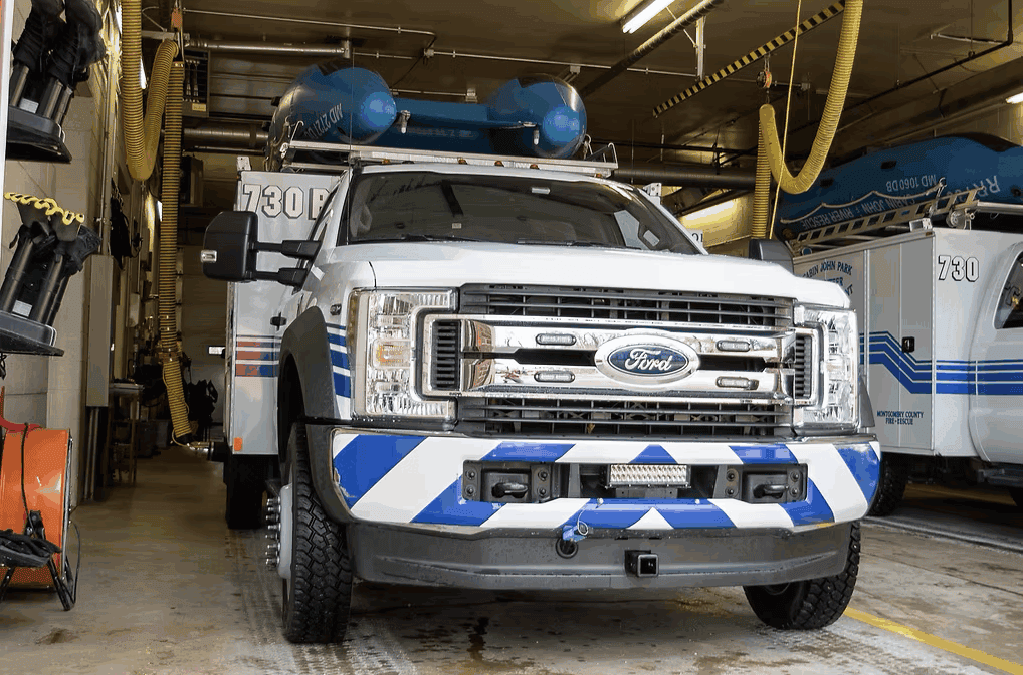
The Montgomery County Fire and Rescue Service (MCFRS), in partnership with the Cabin John Park Volunteer Fire Department and the Upper Montgomery County Volunteer Fire Department, is home to a talented Swift Water Rescue team. Fire stations 10, 30, and 14, which border the Potomac River, host Swift Water Rescue equipment, including boats, specialized response vehicles, and specially trained personnel. To support local responders and bolster their response capabilities, the Maryland National Capital Region Emergency Response System (MDERS) provided funding for six MCFRS members to attend the Rescue from Vehicles in Floodwater Course, geared towards improving Swift Water Rescue skills and techniques. This additional funding support from MDERS enhanced Swift Water Rescue responses within Montgomery County and the National Capital Region (NCR). The skills taught in the training proved their value in a successful incident outcome on July 31, 2025.

According to the MCFRS Incident Response Policy (2019), swift water is defined as “water that moves faster than an average person can comfortably walk, and flat water is moving more slowly than the average person can comfortably walk.” Per MCFRS Response Data, in Calendar Year 2024, Swift Water Rescue units from Stations 10, 30, and 14 responded to a total of 333 calls for service with 34 additional responses from non-swift water assets such as flat-water boats (MCFRS, 2024).These Swift Water Rescue teams respond to both water rescues as well as trail rescues along the Potomac River, where patient access or movement to an ambulance staging area is best done via boat. These invaluable skills are utilized throughout the NCR and can be deployed nationally as emergencies arise.

The Rescue from Vehicles in Floodwater Course is operated by Rescue3 International in western Maryland. According to Rescue3 International, the course directly explores scenarios with vehicles in floodwater, including but not limited to education on vehicle movement when in water, to vehicle access, and victim extrication (Rescue3 International, N.D.). To create a fully immersive and realistic training environment, the class takes place in a purpose-built whitewater rafting facility, complete with real, donated vehicles. MCFRS has noted the challenges with vehicle and floodwater rescue training, specifically access to realistic scenario settings. MCFRS Captain Mechlin commented:

“The Rescue from Vehicles in Floodwaters Course is conducted in an environment that is the closest to real life I have experienced. The specific skill of a tethered swimmer jumping to a flooded car, removing a victim from the car, and being ferried to shore was the highlight for me. I have simulated those skills or performed them in a natural environment, but never with a real car in moving water. The removal of victims from the car was performed in multiple ways, such as from the roof, sliding door, or window.

Additionally, the students are used as victims during the class. I have been a first responder on flooding incidents, but fortunately, never the victim. This gave me a unique perspective that I have never had before and will be able to use in flooding incidents in the future.” The principles from this course and the existing training provided to MCFRS personnel were on display during a recent response.

On July 31, 2025, MCFRS assets responded to Bradley Boulevard in Bethesda, Maryland, for a reported vehicle stuck in floodwater following a thunderstorm. Upon arriving on scene, Swift Water Rescue assets found a vehicle swept off the roadway, nearly fully submerged in flood water, and on top of that vehicle clung an 8-year-old child (Montgomery County Fire Rescue, 2025). On the day of the incident, Montgomery County was experiencing a series of strong thunderstorms that necessitated multiple responses from Swift Water Rescue units across Montgomery County to calls such as vehicles stuck in floodwaters. As a result, MCFRS units were already on the road and ready for deployment, further contributing to the successful outcome of this incident. Upon arriving on the scene, first responders quickly deployed resources to rescue the stranded child as well as stabilize the vehicle from moving and potentially jeopardizing the rescue effort.  The tactics deployed during this response effort were trained upon during the course. The opportunities presented to the MCFRS Swift Water team during the Rescue from Vehicles in Floodwater Course allowed for realistic scenario-based training, which contributed to the successful outcome of this incident.
MDERS is always willing to assist with the development and improvement of capabilities and technical skills across all stakeholder disciplines. This is exemplified by the successful MCFRS rescue operation on Bradley Boulevard.

Written by Matt Panagos

References:

Montgomery County Fire and Rescue. (2024). MCFRS 2024 Total Dispatched Incident Counts. Accessed August 19, 2025 via https://www.montgomerycountymd.gov/frs-ql/

Montgomery County Fire and Rescue. (2019). Incident Response Policy Appendix M, Initial Actions for Water Rescue Incidents. Accessed September 2, 2025 via https://www.montgomerycountymd.gov/frsql/resources/files/swsj/policyprocedures/admin/IRP_Appendix_M_Water_Rescue.pdf

Montgomery County Fire and Rescue Community Outreach Blog. (2025). Swift Water, Swift Action: Rescue on Bradley Boulevard. Accessed August 26, 2025 via https://mcfrs.blogspot.com/2025/07/swift-water-swift-action-rescue-on.html

Rescue3 International. (N.D.). Rescue from Vehicles in Water. Accessed August 26, 2025 via https://www.rescue3.com/courses/rescue-from-vehicles-in-water-rvw/#:~:text=The%20Rescue%20from%20Vehicles%20in,access%20techniques%20and%20victim%20extrication.

Mechlin, Mark. (August 21, 2025). Comments on Rescue from Vehicles in Water training course. Provided via email by MCFRS Battalion Chief Jeremy Shaffner.

MDERS Staff Join “Heroes on the HERizon” Camp to Inspire Future Public Safety Leaders

In July, members of the Maryland-National Capital Region Emergency Response System (MDERS) staff joined other public safety professionals from around the region in serving as camp counselors for the Anne Arundel County Office of Emergency Management’s HERoes on the HERizon summer program. The week-long camp was designed to encourage young women in high school and college to explore careers in emergency management and public safety through hands-on training, interactive workshops, and field trips with local public safety professionals.

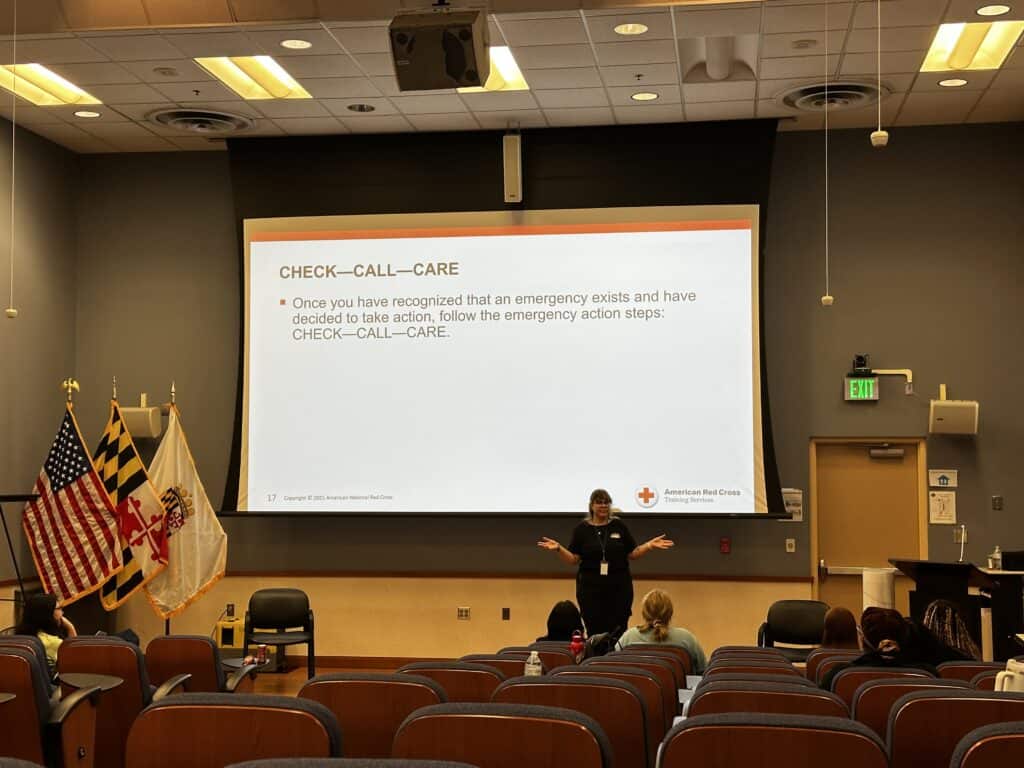
Throughout the week, campers participated in presentations and activities hosted by public safety partners from across the state. Elizabeth Adams, MDERS Emergency Response Specialist, led CPR training for campers, while fellow Emergency Response Specialist Katie Dwyer introduced participants to the fundamentals of Public Access Trauma Care (PATC). These sessions provided essential life-saving skills and highlighted the important role bystanders can play in emergencies.

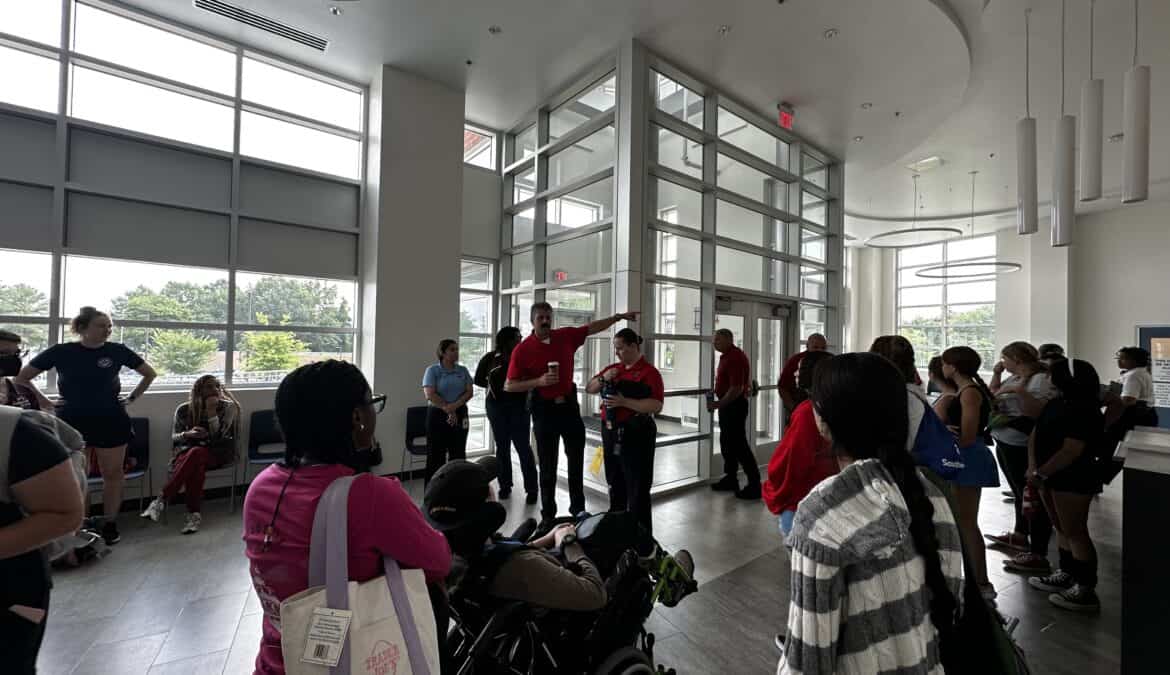
Midweek, participants joined MDERS stakeholders in Prince George’s County for a full day of immersive learning experiences. They toured the Public Safety Firearms Range to see firsthand how local law enforcement officers train, followed by a visit to the new Prince George’s County Police Department’s Special Operations Division building to explore the specialized equipment used for both daily operations and special events. The day concluded at the Prince George’s County Public Safety Communications Center, where campers learned about 911 operations, toured the facility, and met with dispatchers and call takers to understand the critical role of emergency communications.

The camp was a great success in sharing valuable insights and lessons to participants about emergency preparedness, leadership, crisis communication, and life-saving skills. The participants learned of the wide range of careers in emergency management and public safety and are eager to serve their communities and represent the next generation as professionals in these fields. This effort also highlighted the value of partnering with neighboring jurisdictions, demonstrating how collaboration across the region strengthens our ability to accomplish shared missions and prepare future leaders.

Written by Hannah Thomas